ACLS Digital Justice Development Grants
“a prescription for housing”: Archiving and Activism for Medical, Health, and Housing Justice in LA County
This collaborative project by UCR and LA Poverty Dept with LA County Health Dept and grassroots activists enhances ethical digital access to first-person narratives and archival documents from the Skid Row History Museum & Archive related to healthcare and housing justice. It foregrounds the lived expertise of Skid Row residents who are unhoused, low-income, use drugs, & otherwise marginalized to demonstrate community origins of visionary approaches to harm reductions, “housing first,” and peer-care networks. The project provides a primary source foundation for integrated housing and health policy, directly combating narrative loss, structural stigma, and the defunding of crucial public health programs. It builds capacity for advocacy, research, skills sharing and new knowledg co-creation.
Principal Project Team:


Archaeological Archives as Inclusive Learning Laboratories
American excavations at iconic sites, like Dura-Europos in Syria, have shaped museums, textbooks, and academic fields in the West, but local communities whose labor made these digs possible have long been reduced to nameless figures in photographs or line-items in budget records. This project aims to insert and amplify local Syrian voices, giving communities a platform to share their stories alongside traditional archaeological narratives. By introducing local perspectives and affordances, it seeks to rebalance a one-sided history and make digital archives more accessible to a wider range of users. Deliverables include oral histories, an enriched dataset, digital training for students and marginalized professionals, and an optimized browsing interface.
Principal Project Team:



Archiving Out of the Box: Supporting Community Ownership of Shared Narratives through a Digital Archiving and Storytelling Kit
The Archiving Out of the Box project supports communities who are excluded from the historical record. The project team, including community partners from Indiana and Ohio, will collaborate on a non-custodial archiving-workflow toolkit with three new affordances. First, it requires minimal to no institutional involvement. Second, it emphasizes minimal computing and minimal cost. Finally, it is a start-to-finish approach that includes relationship building, community collection, post-production, and post-archive impact guides. In addition to the publication of two community digital archives using the toolkit, the team will distribute the Archiving Out of the Box toolkit for open peer-review and ultimately, for wider public use.
Principal Project Team:


Assessing Surveillance Efficacy and Fostering Visions for Community Safety for Social Justice in Detroit, MI
The Safety Ain’t Surveillance Coalition is a city-wide organization seeking to build non-punitive ways to build safety across our city, without continued reliance on surveillance technologies that strip Detroiters of their privacy while criminalizing Black neighborhoods and people. The research work will involve collaborating with community members to address the current divide between digital justice, racial injustice, and public safety. We are carrying out this work by building critical perspectives that inform the protection of rights to privacy in the nation's largest majority-Black city through collaborative analysis, the development of a layered interactive digital map, and corresponding oral histories of Detroiters addressing digital justice, racial injustice, and public safety.
Principal Project Team:

Building the Environmental Injustice Global Record, Connecting Researchers, Teachers and Environmental Justice Advocates
The proposed work will strengthen the workflows, technical infrastructure and community of practice building the Environmental Injustice Global Record, an expansive digital archive and collaboration space designed to address environmental injustice in settings around the world. Using open source digital infrastructure, collaborating researchers build digital collections, collaboratively analyze data, and publish in diverse, multimodal forms. The EiJ Global Record links academic researchers (including students), teachers (in K-12, university and community settings), and environmental justice advocates. The work is motivated by commitments to community-engaged research, (decolonized) open science, open source software, and innovative forms of scholarly communication.
Principal Project Team:




Chesapeake Heartland: An African American Humanities Project (Washington College): Digital Justice Fellow, Community Historians, and Digital Archivist/Historian
Chesapeake Heartland: An African American Humanities Project is a collaboration among Washington College, the National Museum of African American History and Culture, and a network of grassroots partners/subgrantees on the rural Eastern Shore of Maryland, as well as several archival institutions. We are developing a model of digital public history in which traditionally marginalized rural Black communities collect, share, and interpret their own histories in collaboration with academic historians/archivists. An interactive website shares thousands of family photos, home movies, oral histories, etc. along with material from institutional archives. We seek salary support and travel funds for two Community Historians, a Digital Archivist, and a new Digital Justice Public History Fellowship.
Principal Project Team:

Expanding Queer Cartographies: Mapping Lesbian Travel Guides
Expanding Queer Cartographies addresses a persistent gap in queer history: where were the women? Working with LGBTQ+ archives and community advisors, we will digitize and map approximately 27,500 women-friendly and lesbian-friendly bars, restaurants, bookstores, and other venues from the lesbian travel guide Gaia's Guide (1975-1992). We will then integrate this data into Mapping the Gay Guides, a database and interactive map of gay male venues, presenting a multi-decade comparative spatial analysis of lesbian and gay male geographies on a national scale. Our deliverables include an upgraded website, interactive map, open datasets, scholarly journal article, and narrative vignettes - all of which make overlooked LGBTQ+ histories newly discoverable to community members and scholars alike
Principal Project Team:

Freedom & Captivity Archive Project: Archiving Carceral Experience
Freedom & Captivity will build a digital archive of carceral experience - the hidden stories of Maine’s incarcerated community members - and perform that archive at venues across the state. The curated archive will be housed at the Maine Memory Network, Maine Historical Society’s digital history platform, and all the material collected for the project will be archived in Colby College Library’s Digital Collections. This will be the first archival space in Maine to hold stories about incarceration, curated and sensitively contextualized by those most impacted by carcerality. By offering a platform for the voices of those previously silenced by carcerality, our project aims to shift the narrative around justice, accountability, and the need for incarceration in the wake of harm.
Principal Project Team:
Honoring Indigenous Community Knowledge: Expanding the Genoa Indian School Digital Reconciliation Project Beyond the Government Archive
The Genoa Indian School Digital Reconciliation Project seeks an ACLS Digital Justice Development Grant in the amount of $98,327 for an 18-month project titled, “Honoring Indigenous Community Knowledge: Expanding the Genoa Indian School Digital Reconciliation Project Beyond the Government Archive.” To date, the Genoa Project has published nearly 3,000 government records, with work underway to publish several thousand additional documents. Building from this work, we request funding to begin a next major phase of our work, supporting descendant communities in telling more complete stories of Genoa through the development of a digital oral history and community knowledge program.
Principal Project Team:
La cultura cura: Digital Equity and Justice for Mexican American Art Since 1848
The University of Minnesota, University of Texas Rio Grande Valley, National Museum of Mexican Art (Chicago), and Mexic-Arte Museum (Austin) propose an 18-month collaboration to ready publication of 8,100+ items on the museums’ websites and open-source tool, Mexican American Art Since 1848, that progressively links US libraries, archives, and museums. We propose to 1) enhance and implement the Protocol for Partnering with Small-Budget Cultural Institutions; 2) test digitization workflows for various media; 3) develop cataloging practices to support dissemination of these museums’ knowledge; 4) with students, increase community engagement with the portal and scale-up overtime; and 5) enrich sustainability plans. Our work empowers Mexican American cultural institutions and artistic heritage.
Principal Project Team:

Na Mo‘olelo o Na Wahine: A Digital Justice Oral History Project Preserving Maui’s HerStories
Since 1976, the Center for Oral History has documented Hawai'i’s working-class, Native Hawaiian, and multi-ethnic communities, centering voices often absent from formal archives. Its next phase highlights the contributions of women of color on Maui through a Mukurtu-based digital platform guided by Indigenous data sovereignty. Using recordings, transcripts, and culturally informed metadata, the project will ethically expand access to underrepresented stories. Digital tools, training modules, a mini-documentary, and podcasts will build community capacity and create a justice-driven, community-rooted repository for Hawai'i and the Pacific.
Principal Project Team:




Reanimating African American Oral Histories of the Gulf South: Enhancing Public Engagement
Reanimating African American Oral Histories of the Gulf South: Enhancing Public Engagement will further develop an open-access, easy-to-use, web-based interface that provides users with resources to enhance student and community engagement with the oral histories and learning modules centered on spoken African American Language. We will expand the project’s impact by going beyond the normal scope of university public engagement and being guided by community feedback and expressed needs. We will respond directly to the needs of a specific marginalized and neglected community by continuing to engage with the Black community within Putnam County, Florida. We will focus our efforts on the oral history of students who attended the first Black schools in Florida before integration.
Principal Project Team:

Reco(r)ding CripTech: A Legible, Accessible, and Impactful Online Archive of Crip Creative Process
Reco(r)ding CripTech documents the creative processes of five artists from the disability community in their art-and-technology residencies with the Leonardo CripTech Incubator. The resulting digital archive will include artifacts of their processes such as notes and drafts as well as recorded reflections, and will be fully accessible on the Ground Works online platform. The next phase of the project is to expand through four specific objectives: 1) Disabled-led User and Accessibility Testing; 2) Curriculum development; 3) Expansion of the archive; 4) Special Edition of Ground Works.This project supports the artists’ evolving practices, captures the experience to inform future access-centered artmaking and archiving, and centers diverse ways of knowing and instantiating knowledge.
Principal Project Team:


Elizabeth McLain
Year:
- 2022
- 2025
Virginia Polytechnic Institute & State University
Assistant Professor

Recovering, Indexing and Digitizing Missing Northeast Slavery Records
This grant will extend the ability of the Northeast Slavery Records Index (NESRI) project to find and present missing digital records of enslavement in eight northeastern states. NESRI ( http://nesri.us) now includes more than 64,000 records accessible to all through free online community-focused reports. Records were legally required to document many births, ownership transfers, and manumissions, and their maintenance is legally required today. Many records are missing from the public historical record because custodians may not understand their meaning or location. The grant would train, supervise and support at least 14 research partners to pursue these records and, thus, further the understanding of the extent and conditions that enslaved people endured throughout the region.
Principal Project Team:

Recruiting and Training the Next Generation of Slave Societies Digital Archive (SSDA) Scholars
The Slave Societies Digital Archive holds the oldest and most extensive serial records for African and indigenous people and their descendants in the Atlantic World. This grant will fund development of machine learning to enhance access to centuries of under-utilized or understudied records for the history of Black, Latinx, and Indigenous communities stored in SSDA. SSDA will recruit and train minority students from Fisk University,Tennessee State University, and Middle Tennessee State University to work on SSDA's machine-learning initiative, transcribe historic documents and develop digital projects related to their research interests. Fellows will present their research projects at a concluding conference attended by leading figures in the field.
Principal Project Team:

Speaking into Silences: Building Community Archives across the Puerto Rican Archipelago
Leveraging the resources of the Oral History Lab @UPRM—and the experience of its interdisciplinary leadership team—the proposed project facilitates the development of community-led oral history for social justice projects from inception to dissemination: tailoring technology kits, digital archives, and multimodal outputs to the specific needs and assets of four community partner sites across the Puerto Rican archipelago. Moving centers of knowledge production from the academy to the community, this project develops post-custodial community archives that remain onsite for direct access by community members, while making stories of surviving stratified disasters (and the experiential knowledges they hold) widely available through mirror collections housed at the Lab.
Principal Project Team:
Supporting Ottawa Data Sovereignty and Cultural Restoration: Digital Infrastructure, Interactive Mapping, and On-the-ground Experience at Maple River, Michigan
A team from University of Wisconsin-Madison, Grand Rapids Public Museum, Little River Band of Ottawa Indians, Culture Keepers Collective, and Muskegon River Watershed Assembly will create an online, interactive mapping experience and linked on-the-ground activities to engage decision-makers, residents, and Tribal members with the Maple River Restoration, which aims to re-open a 4.6-mile side channel of the Muskegon River—blocked by 1880s lumber barons—to support culturally important Manoomin (wild rice). We will use Mukurtu to experiment with cross-institutional infrastructure to protect culturally-sensitive materials about Ottawa persistence, leveraging open source digital and in situ placemaking activities to re-story Indigenous erasure and imagine together what Maple River might become.
Principal Project Team:



Thámien Ohlone Augmented Reality Tour
This proposal supports the completion of a ten-stop Thámien Ohlone Augmented Reality Tour for mobile phones that engages the public with Native Californian history, culture, and persistence at the site of Mission Santa Clara and Santa Clara University from precontact times through colonization and projecting into the future. Co-created with the Muwekma Ohlone Tribe in recognition of the tribe’s rhetorical sovereignty, or inherent right to tell their own stories on their own terms, this place-based project seeks to highlight Native experiences of colonization and cultural persistence by virtually emplacing Indigenous narratives, languages, and material culture on the modern landscape, creating opportunities for cultural knowledge sharing within and for the tribal community in the process.
Principal Project Team:



The arqive: An LGBTQ Digital Storytelling Map
The arqive is an LGBTQ (Lesbian, Gay, Bisexual, Trans, Queer) digital storytelling map. It is an interactive repository of geographically and temporally located LGBTQ events and stories that presents narratives of LGBTQ history around the world, foregrounding principles of social justice, diversity, and inclusion through humanities perspectives. We are requesting support to build out the next phases of development: 1) continued technical development of the platform with additional UX/UI features such as gamification and AR; 2) content creation and research through collaborations with researchers, graduate assistants, and other institutions; and 3) outreach to community partners, sponsors, and the public to increase visibility and accessibility of this site and generate more user activity.
Principal Project Team:


The Black Lunch Table Digital Archive
The Black Lunch Table Digital Archive (BLTDA) is a joint project between arts and culture non-profit Black Lunch Table (BLT) and Rutgers University Mason Gross School of the Arts. Building on BLT’s digital archival collections featuring 800 hours of recorded conversations with Black artists, creative workers, and community members. This phase of the project will make this unique oral history resource available to the public in its entirety for the first time. An open access, born-digital collection of images, transcriptions, and roundtable conversations featuring over 1,200 people from across the United States, Canada, and South Africa, the BLTDA is a fully-independent repository championing self-authorship and narrative control in the making and expansion of contemporary cultural history.
Principal Project Team:

The Nevada Racist Covenants Research and Redaction Project
The project documents housing discrimination in Nevada and how communities of color have nevertheless persisted. It will create a website and smartphone application using mapping, filmed oral histories, archival research, and historical narration. Pursuant to state law, it researches racist covenants, notifies homeowners, and uses local courts and county recorders to redact racist covenants. This project will answer: how was America’s racist housing system created from the “bottom-up,” that is, through the coordinated actions of thousands of government decision-makers and real estate professionals? What present-day legacies remain? Technological advances such as digitization of deeds make it now possible to document and interpret racist covenants for scholarly and general audiences.
Principal Project Team:

The Ojibwe Muzzeniegun Digital Edition
Our project will create a digital edition of a collaboratively-written 19th-century manuscript Ojibwe literary magazine, making a significant work of early Indigenous literature publicly accessible. Working with Tribal partners and an advisory board, we will develop digital tools that innovatively illuminate the contexts of translation, exchange, and appropriation crucial to the magazine’s production yet obfuscated in contemporary scholarship. With a 2023-25 planning grant, we developed editorial and workflow policies, built relationships with community partners, and digitized and transcribed all magazine issues. An ACLS grant would let us build on this success and enable us to build our digital platform and develop resources for reading and teaching the Muzzeniegun with our collaborators.
Principal Project Team:
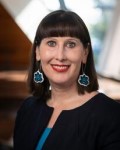
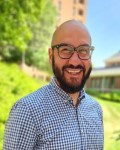


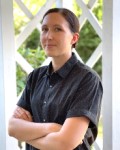

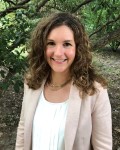
The Personal Writes the Political: Securely Rendering Black Lives Legible Through the Application of Advanced Machine Learning (ML) to Anti-Apartheid Solidarity Letters
The Personal Writes the Political (PWP) is a digital humanities project that applies advanced machine learning (ML) models to anti-apartheid solidarity letters predominantly authored by Black South African women. We created a software pipeline called Careful Recall (Caracal) which automates the transcription of handwritten materials into machine readable text and conducts named entity recognition to distinguish between private identifying information from relevant research data in highly sensitive handwritten archives. We will use Caracal to extract modest datasets from selections of thematically united letters we call focal clusters. In addition we will conduct skills transfer to this collections' home archive, the Mayibuye Centre Archive.
Principal Project Team:

The Senegal Liberations Project
The Senegal Liberations Project brings together educators from the U.S. and West Africa to address the lack of attention to slavery and freedom within Africa. For descendant communities, and those around the world who continue to live in slavery's centuries-long repercussions, this project opens access to sources, tools, and analysis to craft a fuller and more just narrative of this fraught moment in global history. Its key source is the Senegalese Registers of Liberation (1857-1903), which documents 28,349 enslaved Africans in Senegal who presented themselves to French colonial officials to request certificates of liberty. Deliverables: accessible database of liberated Africans, public-school curriculum, collaborative research projects, animated digital story, bilingual website.
Principal Project Team:



UC Irvine’s PrisonPandemic: Inspiring Community Dialogues with Incarcerated Voices
UC Irvine’s PrisonPandemic collection consists of almost 5,000 letters and phone calls from incarcerated people describing their experiences while incarcerated during the COVID-19 pandemic (2020-2023). The collection, and its details of carceral life, provides rare insight into one of our society’s greatest modern tragedies and how people caught in this tragedy made meaning of their experiences. One-sixth of the collection is currently available on a full-text searchable website. We propose to substantially expand the number of stories available on our website, increase accessibility of the stories, and expand outreach and awareness of the website – through an art installation of refurbished prison phones playing archived stories, a webinar, and an increased social media presence.
Principal Project Team:


Under False Pretenses: The Inequities of Tickets Issued in Error
Tens of thousands of Chicagoans are issued parking tickets under false pretenses each year. Although these tickets impact virtually everyone, they devastate the already disadvantaged. Not only did our original project identify how one errored ticket results in bankruptcy every day, but these bankruptcies disproportionately impact Black and Latinx drivers. After reviewing nearly 3.6 million tickets between 2012-2018, the original project cross-referenced multiple sources of administrative data to identify more than 1-in-8 were issued when restrictions did not apply. In the proposed project, we will expand the dataset to 2024 and create an online platform. The platform will translate our results to broader audiences, disseminate actionable curriculum, and deliver resources to those impacted.
Principal Project Team:
Writing Beyond the Prison
Writing Beyond the Prison expands a prior ACLS-funded initiative that created the WBP Living Archive, a national repository of manuscripts authored by incarcerated writers. This next phase builds a digital-justice ecosystem through two Edovo-based curricula: Herstory’s trauma-informed writing program and ZoMedia’s cooperative governance training. These modules enable incarcerated learners to develop craft and their leadership skills, and to submit manuscripts of any genre for publication, editorial mentorship, and archival preservation. By integrating humanities education, digital access, and authorship pathways, the project advances equity, strengthens academic and community scholarship, and centers the intellectual labor of people historically excluded from digital learning.