The United States continues to grapple with a heated and highly divisive political landscape and ongoing culture wars. This context, coupled with increasing public distrust of the value of higher education and the legitimacy of many humanities and social sciences fields and research, has added to the precarity faced by Black scholars navigating academia today.
After a year of continued attacks by the current presidential administration, as well as in many states, where books, courses, and elements of core curriculum have been banned or censored, and a culture of fear over what one teaches, or says, or whom they hire has become the norm, how are Black scholars doing?
We asked members of the ACLS community at different career stages to share their perspectives as researchers, writers, teachers, mentors, and strong individuals on navigating the current context on and off campus.

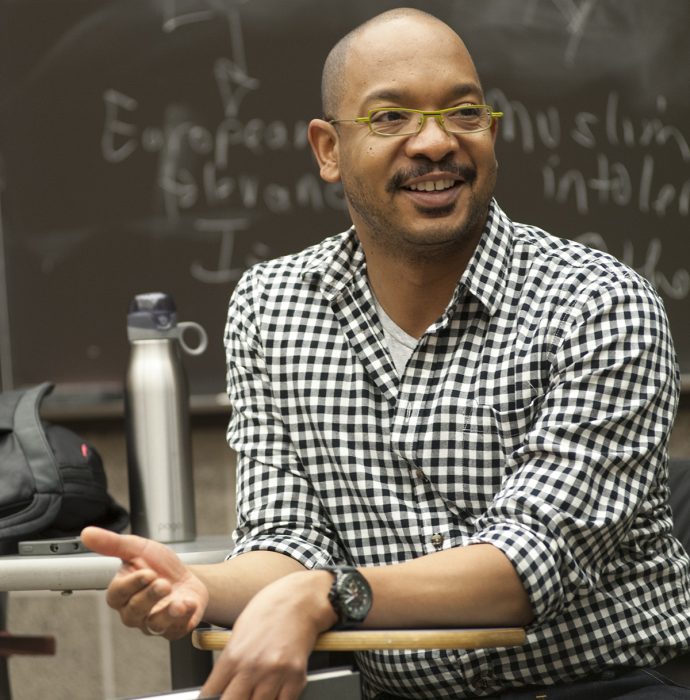
Resilience, at this moment, means refusing to confuse institutional recognition with intellectual value. It means continuing to write, teach, and mentor with the assumption that this work will matter beyond the university—because historically, Black Studies, Ethnic Studies, and Women’s Studies were never meant to be confined to it.
Professor
North Carolina State University
2025 ACLS Fellow
On Changes and Challenges Since January 2025
Personally, this has not been a moment of defeatism. I feel sober but not defeated. This is not a moment for optimism in the shallow sense, but for political clarity. The year ahead will likely bring further institutional retrenchment and intensified ideological policing…
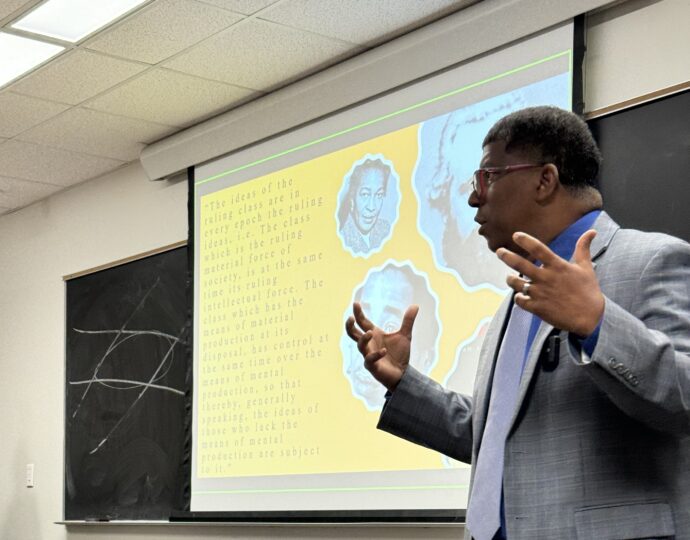
The current attack on Ethnic Studies and Black History Month, occurring alongside a broader constitutional crisis, should be understood not only as a threat but as a summons…Diversity and inclusion have been reduced to managerial slogans, easily discarded when inconvenient. The tragedy of the present is its historical amnesia. In the McCarthy era of the late 1940s and 1950s, university leadership largely chose accommodation over courage, exposing how quickly intellectual institutions yield when stability is placed above principle. Today confirms the lesson we refused to learn…
This moment demands that we think beyond preservation toward transformation. What is the practical value of our accumulated scholarship for working-class communities navigating housing insecurity, environmental risk, educational inequality, and political disenfranchisement? What public policies can be grounded in this knowledge?
In this moment, as one great thinker noted: “All that is solid melts into air, all that is holy is profaned, and man is at last compelled to face with sober senses his real conditions of life, and his relations with his kind.” So, literally, the future possibilities are endless.
On Resilience
Resilience, at this moment, means refusing to confuse institutional recognition with intellectual value. It means continuing to write, teach, and mentor with the assumption that this work will matter beyond the university—because historically, Black Studies, Ethnic Studies, and Women’s Studies were never meant to be confined to it.
Strategically, this involves widening the audience for scholarship, translating decades of research into public-facing arguments, policy proposals, and pedagogical interventions. It means treating research not only as interpretation but as a resource for progressive urban planning, educational change, housing policy, and democratic reconstruction.
Pillars of Support
On campus, it is found less in formal administrative structures… than in small, durable relationships: colleagues committed to intellectual integrity, students who insist on serious engagement, and interdisciplinary spaces that still treat critical inquiry as a scholarly obligation rather than a political liability.
Beyond campus, support is stronger and more reliable. For me, it comes from scholarly networks, independent research collectives, community organizations, and historically Black intellectual societies such as the Association for the Study of African American Life and History (ASALH), in addition to the Philosophy Born of Struggle conferences that have never mistaken scholarship for mere credentialing and have long understood knowledge as a public good forged under conditions of hostility.
The ACLS Fellowship has been especially meaningful in this context—not simply as funding, but as an institutional refusal to retreat. It affirms that rigorous humanistic research still matters, even when it is politically inconvenient. In a moment when legitimacy itself is under contestation, that recognition carries real weight.
Dr. Ferguson is currently working on a book tentatively titled Between Marx and Malcolm: African American Philosophy in the Age of Anti-Communism. This book reconstructs the twentieth-century formation of African American philosophy and philosophers through the pressures of Cold War liberalism, professionalization, and anti-communist repression.
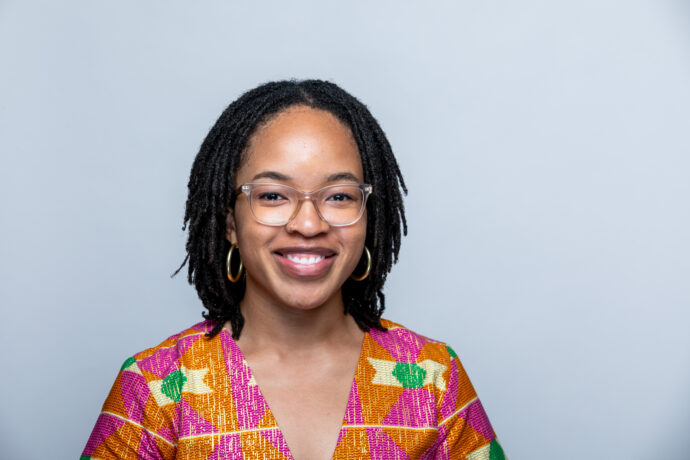
The challenge is not what I can teach, but ensuring that my students survive the external threats against our campus. That I survive.
Assistant Professor of Philosophy and Philosophy and Religious Studies Program Coordinator
Fisk University
2021 ACLS Emerging Voices Fellow
2025 ACLS HBCU Faculty Fellow
On Changes and Challenges Since January 2025
HBCUs are often more underfunded in terms of research for faculty than at PWIs (predominantly white institutions). At my institution, faculty rely on Title III funding to help support research and innovative pedagogy. When that funding was uncertain in 2025, Fisk froze spending.
In September, it was announced that HBCUs would receive $435 million dollars in federal funding, a significant one-time increase. But it’s important to note that the influx of funding was redirected from Hispanic-serving institutions, predominantly Black institutions, and several other smaller minority-serving institutions. This pits marginalized institutions against one another in a manufactured competition for survival.
The challenge is not what I can teach but ensuring that my students survive the external threats against our campus. That I survive. While I do not face restrictions on course content or research, I do face additional emotional labor.
During my time at Fisk, we faced a bomb threat, and our students were sent threatening texts instructing them to be at specific locations to be transported to a plantation. While the faculty and staff rallied to support the students and each other during these traumatic events, such labor is not accounted for in workload calculations. Yet it is essential for the persistence and well-being of our students and for the success of Fisk’s mission. In these traumatic moments, I am also afraid for myself. It’s a harrowing experience to inform loved ones that I need to evacuate to a safe space because there’s been a bomb threat to my campus.
I find resilience in serving my students. Being a source of strength and support for them. I find comfort in the material I teach, as well as the research I do. There is an ineffable sense of strength knowing that the buildings I teach in and the very ground upon which I walk echo with the legacy of pillars of Black thought who have paved my way.
Sources of Strength
As an Emerging Voices Fellow, I was given the time and resources to focus on my research, and I obtained valuable experience at an R1 institution. It was through that fellowship that I gained clarity on what I wanted my academic career to look like and the type of students that I want to serve. It is in this clarity of my mission that I find the most resilience.
Diversity in philosophy for Black professors is astonishingly low, representing roughly 3% of the field within the United States. Given this, it is important to me that diverse undergraduates see me being a philosopher and for them to know that this is a path that they can take. Being at Fisk also grants me the freedom to tailor my course offerings and readings to my students in a way that I could not do at other institutions.
I am grateful for organizations like ACLS fostering diverse scholarship and course innovations while rejecting a zero-sum approach. Being awarded the ACLS HBCU Faculty Fellowship bolsters my hope in the future of academia and the humanities.
Dr. Henning’s published articles include, most recently, “Talkin Trash and Makin Sense: the Value of Abusive Ad Hominem Arguments in African American Argumentation,” and “When and Where I Carry: Black Feminism and the Right to Bear Arms,” which her 2025 ACLS HBCU Faculty Fellowship proposal manuscript expands upon.
The protests in the Twin Cities are virtual advertisements for how the fields that are dearest to me have made their way to everyday people and are being put to good use and good trouble.
William Robertson Coe Professor of Women’s, Gender, and Sexuality Studies and American Studies
Yale University
ACLS Board of Directors
Since January 2025, there’s been a lot of obeying in advance administratively. One of the major initiatives that we used to bring senior luminaries in the fields of Black Studies, feminism, trans studies, queer studies, etc. to campus for a year’s worth of teaching and research was done away with. The Belonging at Yale Initiative ended in 2025. There’s also been increased attention by the administration and external forces to websites. How is diversity being represented? Are there references to Palestine and Palestinians? All of this has produced a chilling effect for students and faculty that will undermine teaching and research possibilities. All of this was done before anything was settled legally and carried out without any real fight.
At the same time, there is robust and maybe even increased interest in the areas that the government seems hell-bent on destroying. Students are still enrolling in courses about the intersections of race, gender, sexuality, and class in healthy numbers. The protests in the Twin Cities are virtual advertisements for how the fields that are dearest to me have made their way to everyday people and are being put to good use and good trouble. So, I’ve been deriving a lot of support from students, colleagues, and neighbors here in New Haven, particularly ones who are interested in producing conversations about the humanities and the interdisciplines in terrains outside the university.
Dr. Ferguson’s latest book, In View of the Tradition: Black Art and Radical Thought (Fordham University Press), will be out in October 2026.
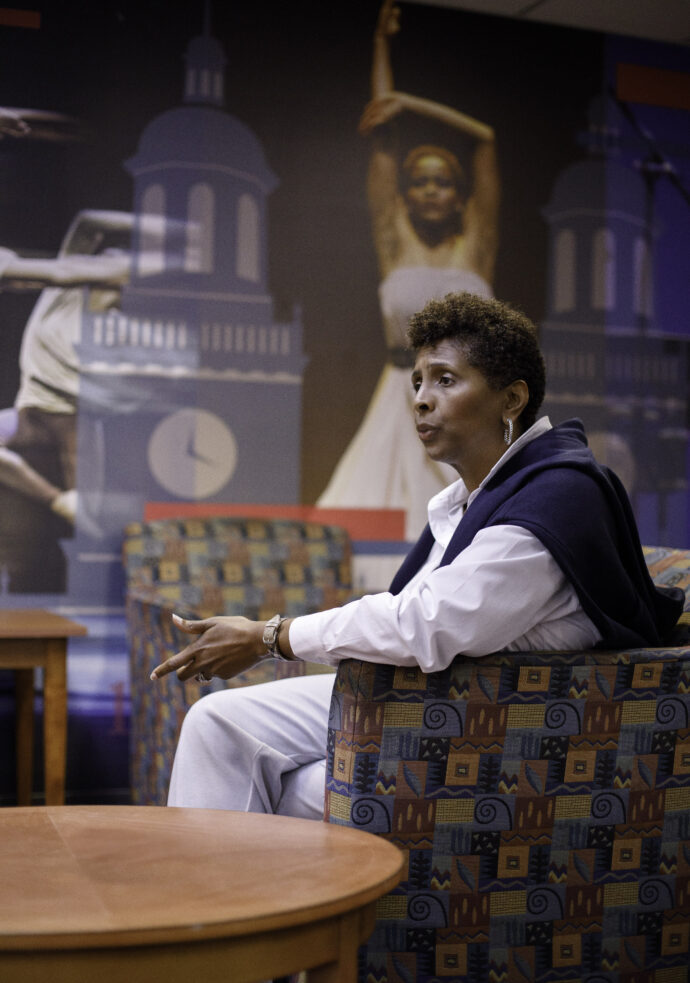
More than ever, I find myself calming students’ concerns that their research isn’t too “radical” to be supported by fellowships or published in journals. They know what they do matters. But they don’t always know how to navigate the politics of an already precarious academy.
Williams speaking with a reporter from Marie Claire for an article about Howard and diversity. Photo credit: Jermaine Jackson
Professor of African American literature and Dean of the Graduate School
Howard University
Secretary, ACLS Board of Directors
On Changes and Challenges Since January 2025
As a graduate dean at an HBCU that’s also an R1, I am most proud of the work our students do to advance ideas and pursue projects that would otherwise go understudied. It’s heartbreaking when those students, who were so excited when they first became graduate students, are more concerned about a future where their work will have no or a very limited role in the American academy.
More than ever, I find myself calming students’ concerns that their research isn’t too “radical” to be supported by fellowships or published in journals. They know what they do matters. But they don’t always know how to navigate the politics of an already precarious academy. I encourage them; and they believe me. But it’s work I’ve never had to do so often.
Sources of Strength
I’m definitely optimistic. We’ve weathered moments like these before, and we’ll weather this one. The humanities equip us to do it. I’m fortunate to be at a university with a clear mission. We can’t stop doing the work we’ve committed to doing because the communities we want to impact are counting on us.
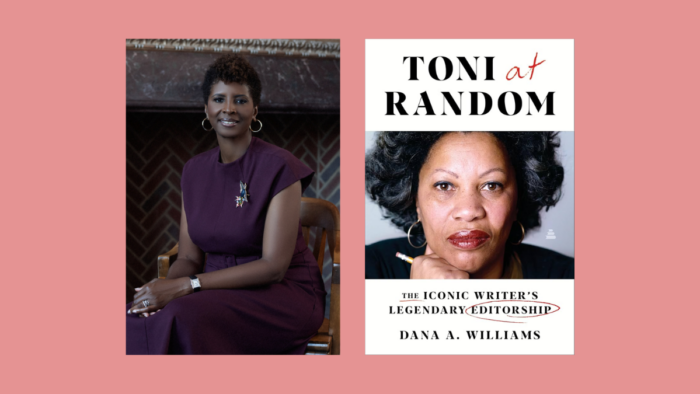
Dr. Williams’ critically acclaimed book Toni at Random, documenting Toni Morrison’s influential 20-year career as an editor at Random House, has been nominated for a 2026 NAACP Image Award in the Outstanding Literary Work – Biography/Autobiography category.
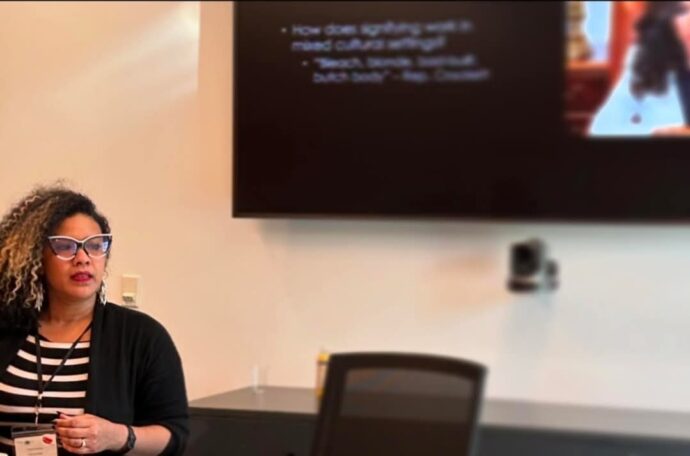
Especially in this time of increased efforts to control and censor what stories can be told about this nation, I continue to be encouraged by Black scholars who challenge us to wrestle with legacies of the past and embolden us to imagine new futures.
PhD Candidate, Religion and African American Studies
Princeton University
Princeton GradFUTURES Fellow
When I first began research for my dissertation, I could not have imagined that debates about the presence of international students in the US would dominate the headlines.
Especially in this time of increased efforts to control and censor what stories can be told about this nation, I continue to be encouraged by Black scholars who challenge us to wrestle with legacies of the past and embolden us to imagine new futures.
As I approach the end of my doctoral studies, I have cherished opportunities to gather with other scholars to share ideas and reflect upon the importance of amplifying the voices and experiences of those often overlooked within histories of the US and its connection to other parts of the world.
Kimberly Akano is currently writing a dissertation on religion, race, and the politics of international education in the United States during the twentieth century. She is also a Princeton GradFUTURES Fellow working with ACLS on research for the new Publicly Engaged Religion Mapping Project and the current landscape for higher education advocacy.
Learn More
-
For Black History Month, ACLS highlights scholarly resources on the hidden and lesser known histories of the Black American experience.
-
Program supports 15 digital humanities projects that enrich cultural heritage through the intentional use of technology
News Article
June 4, 2025
-
Trushna Parekh F’24, Lamon B. Lawhorn G’24, and Ana Lucia Araujo F’24 share their research and the impact of the ACLS HBCU Faculty Fellowship and Grant Program.
News Article
February 11, 2025
-
Dana A. Williams is nominated for a 2026 NAACP Image Award for her book Toni at Random.
News Article
January 14, 2026
-
Roderick Ferguson will deliver one of Princeton’s longest running and best-known public lecture series.
News Article
October 29, 2025