

“Advocacy” in Different Forms: December 2, 2025 Advocacy Update
This fall, thanks to our partnership with Princeton University’s GradFUTURES Social Impact Fellowship, Kim Akano, currently in the final year of her PhD program in religious studies, has been conducting a landscape analysis of advocacy for the humanities and social sciences. Looking at responses to state and federal legislation attempting to limit academic freedom and access to research and study in these fields, Kim has utilized her research skills in tracking activities by ACLS peer organizations in order to help ACLS further refine our own work and better understand how different groups define and conduct “advocacy” in response to the current political climate.
Here she shares some of her initial findings.
What does it look like to advocate for the humanities and social sciences during this particularly challenging moment in higher education? Organizations like ACLS continue to explore this question amid unprecedented political and social challenges that threaten the progress of research and teaching at institutions around the country. Pointed attacks on higher education such as the proposed “Compact for Academic Excellence in Higher Education,” stoke fear, heighten precarity, and intensify fracturing within the higher education landscape.
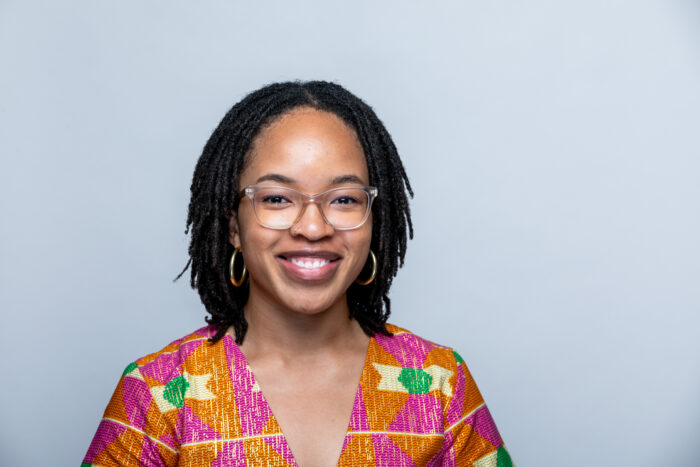
While working to understand the broader landscape of advocacy for the humanities and social sciences, I began to reflect upon the many individuals, institutions, and organizations that have supported my research and professional development throughout my academic career. My doctoral program has been bookended by two critical moments for higher education: the COVID-19 pandemic and current coordinated efforts to suppress research and teaching on topics critical for our shared understanding of the human experience. Without the resources and support found within a broad network, including my home scholarly society, the American Academy of Religion, I would not have been able to navigate these social and political changes.
The most complicated, but ultimately most encouraging, finding from my analysis of advocacy for the humanities and social sciences is that there are as many advocacy strategies as there are supporters of the humanities and social sciences. Among an extraordinary range of responses, as shared in a previous update, member societies and scholarly organizations have issued public statements, hosted formal and informal convenings, developed online resources, provided material support for scholars, and engaged members of Congress. This diversity of responses is worth celebrating! Our member societies and peer organizations represent academics at a range of institutions–large and small, public and private, two- and four-year. The breadth of their advocacy can be found on many organizational websites, yet regularly exceeds what can be found online as societies meet the seen and unseen needs of their members. They offer invaluable support and affirmation, and often do so with limited staff. Organizations representing various institutions, disciplines, and communities of all sizes are needed to address the sweeping scale of disruption that is currently taking place within higher education.
As part of its advocacy strategy, ACLS finds strength in partnering with and learning alongside professional academic societies, college and university administrators, funders, and supporters to promote the value and necessity of the humanities and social sciences. It is through working together that we can not only respond to current challenges facing higher education but also continue working toward building and reimagining systems that support the future of humanistic research, teaching, and learning.
Ultimately, it is the skills and tools that define our profession that have best prepared us to respond in this moment. Students, educators, and scholars are using their research expertise, their cultivated ethic of care, their creative capacity for coalition-building, their skills in communicating with diverse publics, and their concern for supporting the next generation of learners and scholars to defend the humanities and social sciences. We must continue leveraging these resources toward work that maintains and improves conditions for the production and sharing of knowledge.
“Advocacy” is defined and approached in different ways. Still, the ongoing efforts of ACLS, its member societies, and peer organizations share the goals of amplifying the public profile of humanistic knowledge and encouraging scholarship responsive to diverse audiences. The following groups, among many others, are working to address pressing areas of concern related to academic freedom, funding for students and scholars, censorship of academic curriculum, and preserving institutional autonomy:
- PEN America continues to be a prominent voice in advocating for academic freedom. By tracking and speaking out against federal and state “educational gag orders” that justify state-based censorship to the detriment of student education, PEN America is working to ensure the free circulation of knowledge in classrooms and at institutions. Their recently announced Champions of Higher Education initiative represents an exciting step forward in building coalitions that seek to engage broader communities in resisting government overreach within higher education and promoting higher education as a public good.
- Representing the particular interests of a wide range of social scientists, the Consortium of Social Science Associations (COSSA) advocates for scholars, colleges and universities, and research centers, and institutions through federal policy advocacy. Drawing on its unique designation as a lobbying and public outreach organization, COSSA created an online Action Center that serves as a hub for resources empoweringupon their unique designation as a lobbying and public outreach organization, COSSA created an online Action Center that serves as a hub for resources that empower supporters of the social sciences to share their concerns, priorities, and needs with elected officials.
- As part of its mission to foster study of the Middle East within a global context, the Middle East Studies Association (MESA) advocates for students and scholars affected by visa revocations, immigration record terminations, and employment retaliation related to academic freedom cases. Their Task Force on Civil and Human Rights launched an Advocacy Resource Center that continues to monitor political and legal developments impacting MESA members. Their Committee on Academic Freedom intervenes in violations of academic freedom by distributing public letters defending students, faculty, and scholars. By advancing free intellectual exchange across borders, MESA ensures that innovative and collaborative teaching, research, and learning remain at the heart of the scholarly enterprise.
- The American Historical Association (AHA) has engaged in a variety of advocacy actions that underscore the value of history education. Members have leveraged their scholarly insights into the historical context surrounding key political issues to craft congressional briefings and deliver testimonies to state legislators. Additionally, the AHA has informed policy decisions by sharing data gathered through public opinion surveys. Combined with online resource guides that offer guidance for how scholars can respond to attacks on higher education, the AHA calls upon both historians and local communities to defend the free pursuit of historical teaching and research.
- Together with ACLS and the AHA, the Modern Language Association (MLA) filed a lawsuit challenging the dismantling of the National Endowment for the Humanities. Beyond the courts, MLA has fostered communities for engaged problem-solving by hosting virtual strategy sessions and webinars that equip members with resources to navigate threats to the humanities on their respective campuses. MLA’s online toolkits on academic freedom and shared governance are an invaluable resource for faculty and administrators looking to respond to increased state-level government intervention in the operations of academic institutions.
- Recognizing that attacks on higher education impact both students and scholars, the National Humanities Alliance (NHA) conducts timely research and shares reports documenting successful strategies for how faculty can engage undergraduates in the humanities, both within and beyond the classroom.
- The American Academy of Arts and Sciences (AAAS) remains an essential partner for disseminating timely statistical data on the state of the humanities through publicly accessible publications that highlight the value of advanced research in the humanities and social sciences. The Academy’s Humanities Indicators Project continues to gather data useful for understanding current trends in the humanities, both within and beyond the academy.
While most current advocacy seeks to engage scholars, faculty, administrators, and policymakers, we cannot limit our work to academic institutions and the courts. Sustaining and strengthening the structures of support for the humanities and social sciences will require more voices, more perspectives, and more compelling ways to articulate why this work matters in venues beyond formal institutions of power.
Kim Akano
Policy Analysis Social Impact Fellow