

ACLS Community Message for August 2025
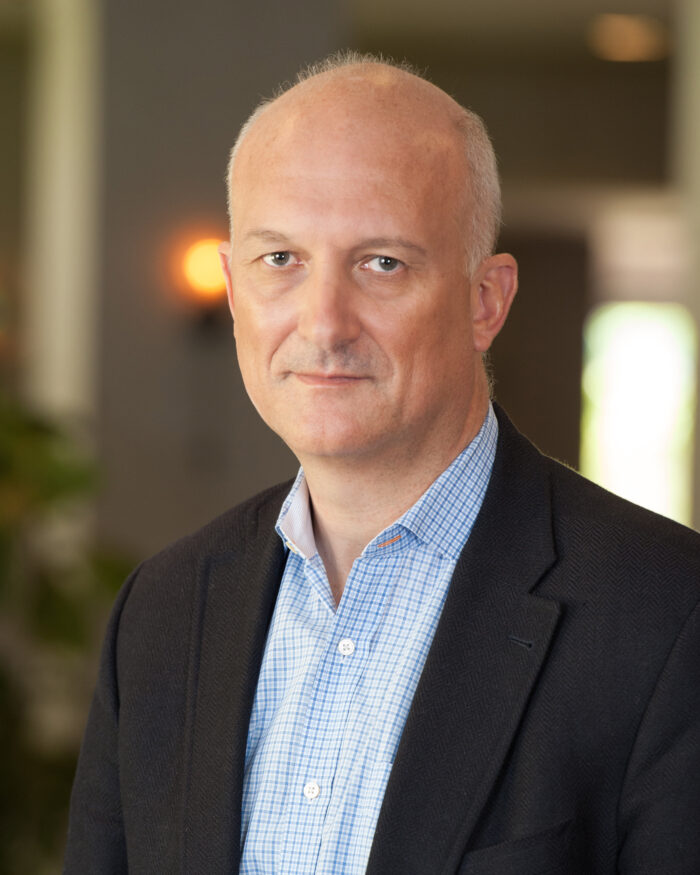
At the 2025 ACLS Annual Meeting in Boston, the Council, comprised of delegates representing our 81 member societies, approved revised bylaws surrounding our organizational governance. While most of the revisions involved practical, operational matters, we very intentionally restated our longstanding mission: “ACLS supports the creation and circulation of knowledge that advances understanding of humanity and human endeavors in the past, present, and future, with a view toward improving human experience.” As part of that “purpose,” we also retained this foundational guiding statement first defined in our 1919 Constitution: “The objects and purposes of ACLS are the advancement of humanistic studies in all fields of learning and the maintenance and strengthening of relations among the national societies devoted to such studies.”
The advancement of humanistic studies is a wonderful goal – and not one that many organizations exist to take on. But it also can be pursued in a thousand different ways. I will be leaving the role of Vice President in September after seven years at ACLS and President Joy Connolly offered me the chance to use this community update to say how I have seen some of the less familiar ways in which our organization pursues the admirable – but open ended – mission of “the advancement of humanistic studies in all fields.”
The two most easily understood methods– supporting ACLS member societies and providing funding to support the work of scholars – are most likely familiar to readers of this newsletter.
Additionally, under the leadership of Sarah McKee, ACLS has undertaken two major efforts aimed at amplifying humanistic scholarship. The first has been to work together across professional boundaries by bringing together publishers, librarians, and JSTOR to design Path to Open. This singular initiative provides publishers with subsidies from subscribing libraries that then allow humanistic books to be released on an open access basis to the world three years after their initial publication. The first tranche of these books, including provocative works like Phillip Ewell’s On Music Theory and Making Music More Welcoming for Everyone, Jessica Chapman’s Remaking the World: Decolonization and the Cold War, and Elizabeth O’Brien’s Surgery and Salvation: The Roots of Reproductive Injustice in Mexico, 1770–1940 will be released as open access titles in January 2026. ACLS has no financial stake in the project, but we – really Sarah and the community partners – have invested in the trust building and collaboration needed to make this innovative direction work for all involved.
At the same time, with support from Arcadia, in 2023 ACLS introduced a competition that provides a significant cash reward to authors and publishers who publish books open access, signaling that when this mode of publishing is possible, it should be applauded. There’s no greater way for the academic community to build – or re-build – trust with society than making the fruits of academic labor intelligible and meaningful and by abolishing the barriers to any and everyone having access to those fruits.
More than ever, we need to both maintain our individual and institutionally housed passions and also actively work through collaborations to preserve and evolve the infrastructure that supports the work of scholarship.
Further, more universities lean on structured data to assess scholarly work, making the accomplishments of humanistic scholars easily tracked can prevent their labor from being lost. ACLS has also been a leader in efforts to get more humanistic research sustainably documented via ORCID. In addition to requiring fellowship applicants to provide one of these unique digital identifiers for researchers which function as a virtual CV, this year, we have begun writing ACLS awards into ORCID profiles. I hope that – down the line – other hidden labor including service on important committees of a university or an academic society will also be written into a scholar’s ORCID. And then be counted.
In addition, ACLS efforts in research not just within but about the enterprise deserve a moment’s reflection.
With the support of the Arthur Vining Davis Foundations, we supported five researchers have been utilizing the College & Beyond II database (built at the Interinstitutional Consortium for Policy and Research Center at the University of Michigan with the support the Mellon Foundation) to conduct quantitative research on various aspects of how a liberal arts education impacts students. In July, we held a workshop where these researchers shared their early results with interlocutors Scott Carlson, senior writer for The Chronicle of Higher Education, Lynn Pasquarella, president of the American Association of Colleges and Universities (AAC&U), and strategy and communication consultant Laurie Fenlason. The work supported through this program has provided rich empirically-based insights into topics concerning how the amount of liberal arts exposure students receive affects their labor market outcomes; the relationship between various levels of student debt and their subsequent political engagement; and how liberal arts education can influence a student’s sense of belonging which in turn connects with civic and democratic outcomes. These papers will be published soon. Beyond adding to our collective research base for understanding our enterprise, we will be working to get these findings into hands of those who are explaining the “secret sauce” of American liberal arts education to legislatures, trustees, and, most important, students and families.
We also have been building the capacity of ACLS to turn a research lens towards our own programs to see what has been learned. Most recently, ACLS program officer Jessica Taylor and sociologist Nancy Kidd have embarked upon a study of the ACLS Collaborative Research Fellowships (2009-2018), a Mellon-funded ACLS program that supported 77 collaborative projects undertaken by 164 scholars. Thirty-two of the collaborators were assistant professors at the time of funding and this new longitudinal research project will examine their career trajectories and how these collaborative projects factored into tenure and promotion for early-career scholars. We seek to understand whether, in fact, bias against collaborative humanistic scholarship exists and, if so, what institutional change might be possible to counter that bias. We anticipate that studying these 32 PIs’ experiences may also reveal some broader insights about the value of collaborative research in the humanities.
American society excels at competition and higher ed as a sector does too. But we need to also look beyond competition and support the inter-institutional infrastructure through which the member institutions and collaborative network partners of ACLS enable collective action. More than ever, we need to both maintain our individual and institutionally housed passions and also actively work through collaborations to preserve and evolve the infrastructure that supports the work of scholarship. ACLS and its partner organizations are so well positioned to play a leading role in these collaborations; as strong winds blow around us, the alternative of standing alone will not hold.
James Shulman
ACLS Vice President and Chief Operating Officer