2025-2030 Strategic Framework
See our progress in other areas here.

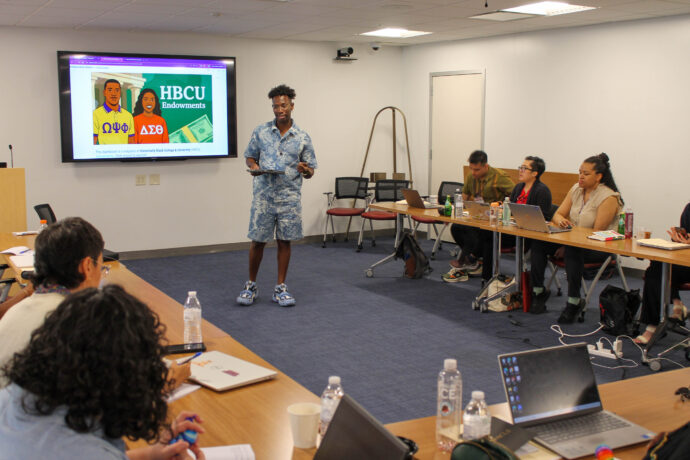

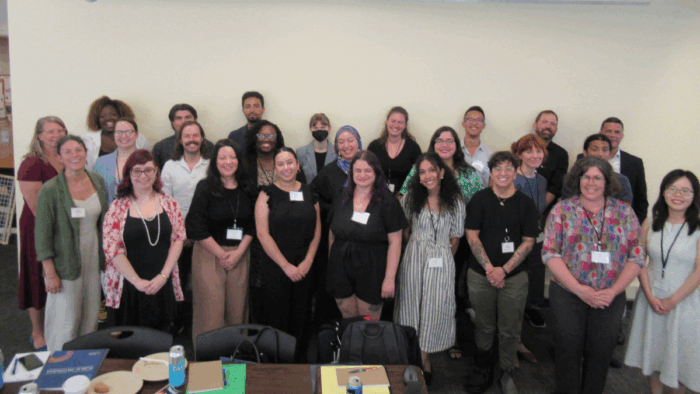
“The Intention Foundry retreat demonstrated how data storytelling can clarify urgent problems and prepare scholars to engage broader publics… It was a clear example of what becomes possible when equity-focused pedagogy meets the tools of data analysis.”
ACLS has stewarded the Path to Open Community Advisory Committee to support the initiative’s longevity, effectiveness, and sustainability, helping to provide feedback, recommendations, and insight as well as outreach and community-building support for the pilot. In January 2026, the first 100 books in the Path to Open collection flipped to open!
In October 2025, ACLS hosted a public panel and award ceremony honoring the 2025 ACLS Open Access Book Prize and Arcadia Open Access Publishing Award winners at The New York Public Library’s Stephen A. Schwarzman Building. These prizes recognize and reward scholars and publishers of exceptional, innovative, and open access humanities scholarship.
ACLS has partnered with three of its member societies—the American Historical Association, the Modern Language Association, and the Society of Biblical Literature—for the Doctoral Futures Initiative, a three-year initiative reimagining humanities PhD programs to better educate the next generation of scholars and prepare them for both academic and non-academic careers. In the first phase of Doctoral Futures, currently underway, each member society is spearheading a committee to study a different part of the graduate education lifecycle: Preparation & Inclusion, Graduate Programs, and Post-Degree Pathways. They are collaborating with Dr. Katina Rogers, Doctoral Futures research consultant, to conduct focus groups to understand the current state of graduate education, identify areas in need of structural change, and survey the landscape of attempted reforms.