

ACLS Community Message for June 2026
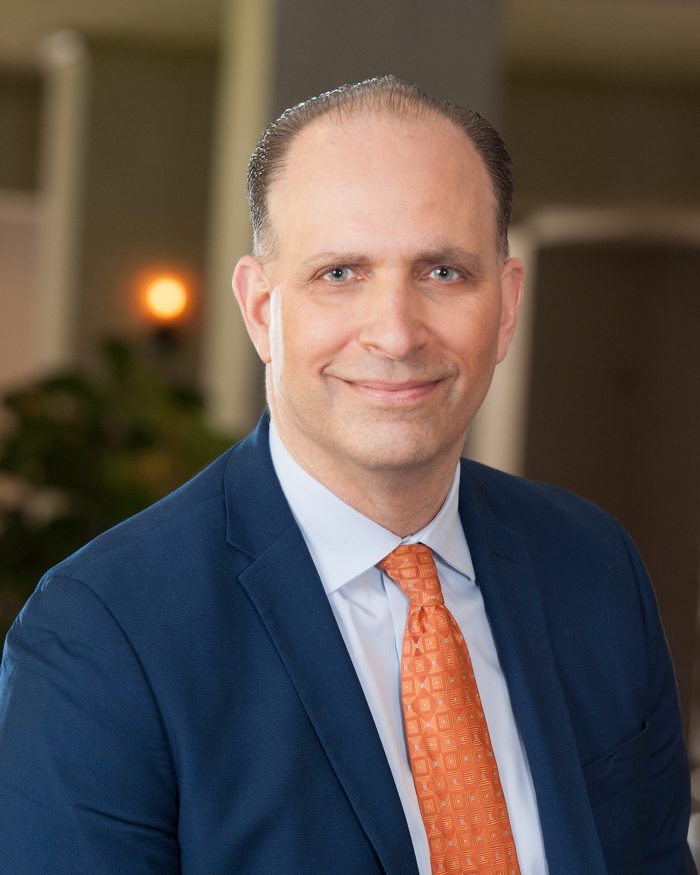
I had the recent good fortune to attend Bruce Springsteen’s “Land of Hopes and Dreams American Tour” when it rolled into New York this past spring. As someone who has been a huge Springsteen fan for over forty years, I know first-hand the power of his live performance, and very much looked forward a few hours of joy, community, and inspiration.
This recent tour certainly had more of a political theme, which is not surprising given Springsteen’s career-long record of writing music that advocates for the working class, the oppressed, and cherishes the spirit of democracy.
After almost three hours of powerful and uplifting music, and before closing the show with Bob Dylan’s “Chimes of Freedom,” Springsteen said this:
“From the beginning, America was born out of disagreement. It’s an ongoing, blessed, sacred argument about what course the country should take. We argue about these things while still recognizing our common humanity, our dignity, and our unity.”
These words in particular struck a chord with me, as ACLS, where I’m privileged to serve as Chief Financial Officer, had launched the “Talk About It” social media campaign just a few weeks earlier built around the message that the world needs more humanistic scholarship and research. Participants in this campaign made compelling posts and videos explaining what the humanities meant to them and why it continues to serve as critical place in our society.
The more I reflected on the message of America being an “ongoing, blessed, sacred argument,” the more it underscored for me what an incredible justification those words are on why we need the humanities. These fields provide the skills needed to continue and strengthen this blessed argument: our democracy. Through them, we learn to understand each other and our varied cultures, generate more civic engagement and debate, and develop more critical thinkers and effective communicators.
These fields provide the skills needed to continue and strengthen this blessed argument: our democracy. Through them, we learn to understand each other and our varied cultures, generate more civic engagement and debate, and develop more critical thinkers and effective communicators.
As a career-long finance professional, I have been encouraged to see that these humanities-focused skills are also generating greater focus in finance-based hiring and promotional decisions. In a recent New York Times column, Maureen Dowd described how executives such as Jamie Dimon at JP Morgan Chase, Ginni Rometty at IBM, Satya Nadella at Microsoft, Mike Novogratz at Galaxy Digital, and Jack Clark at Anthropic have all warned of the need for emotional intelligence and storytelling. In fact, Dimon’s bachelor’s degree at Tufts was in economics and psychology, while Clark has a BA in English literature with creative writing from the University of East Anglia.
Throughout my career, it has become clear that humanities-based skills are critical for success in finance. For certain, finance professionals will always need to have a strong background in accounting, financial reporting, and data analysis, as well as technology expertise. But what distinguishes a number-cruncher from someone more strategically and effectively serving their organization is one who brings those human-based proficiencies to the table as well.
It’s the persuasive communication on a funding pitch; the clarity in writing an executive summary to the Board; the critical thinking to understand why projections may be off; the professional management of executive and colleague relationships; the character to make ethical decisions on behalf of your organization; the humanity needed when giving bad news or telling someone that funding is not available; and for higher education and nonprofit professionals, understanding and accepting that the mission should drive the financial planning.
On this last point, one of my favorite budget-related quotes comes from Barack Obama: “A budget is more than just a series of numbers on a page; it is an embodiment of our values.” It is with this philosophy, and with our mission ever-present, that ACLS has consistently allocated well over 80% of its spending on fellowship and grant programs. We all strive to ensure that ACLS continues to provide a strong (and more than financial) return-on-investment to our fellows and grantees, member societies and organizations, foundation partners, and donors.
So, in keeping with the spirit of the recent ACLS social media campaign, what does the humanities mean to me, as the organization’s CFO? If the above did not sufficiently communicate it, then my elevator-pitch is that the humanities provide us with the skills to better understand each other and the ability to try to walk in someone else’s shoes. Or as perhaps Dylan and Springsteen are trying to tell us, they are “Chimes of Freedom,” tolling as the bellwether for our blessed and sacred arguments.
Matthew Sapienza
ACLS Chief Financial Officer