

China, long known as the world’s factory, is now manufacturing not only goods but also culture for Western societies.
Zepeng Zhou
2026 Luce/ACLS Travel Grantee in China Studies
Packed with the melodrama and the emotional whiplash of traditional soap operas, the short drama industry has become a burgeoning entertainment gold mine across social media platforms like TikTok and YouTube. The genre originated as duanju or vertical “micro-dramas” in China around 2018 and has since exploded into an international phenomenon. Coinciding with trends like “Chinamaxxing”, short dramas are yet another way Chinese culture is making its mark on American society. These addictive one-to-three-minute-long videos offer an important window into today’s transnational cultural landscape.
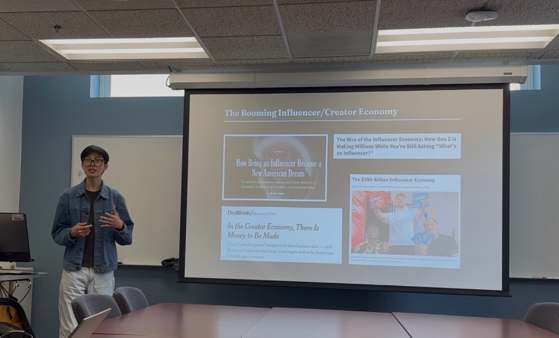
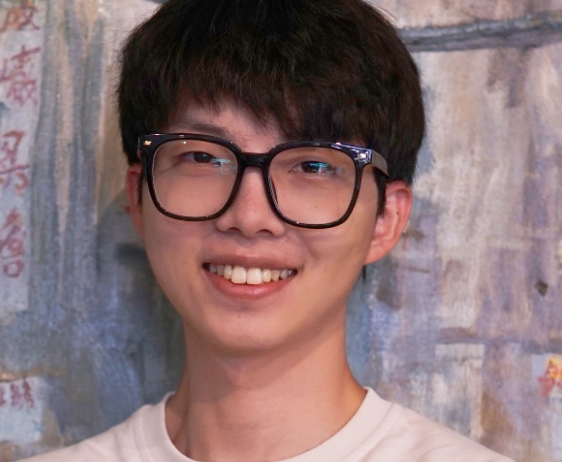
Zepeng Zhou, a 2026 Luce/ACLS Travel Grant in China Studies awardee, explores this topic in his research project, “Engineering Attention Across Borders: Transnational Creative Labor in the China-US Short Drama Industry”. His work examines the growing influence of China’s short drama industry in Western societies and how Chinese creative workers navigate political and cultural differences to engage American audiences.
Zhou is a doctoral candidate in Sociology at Emory University. In 2026, he was awarded the Luce/ACLS Travel Grant in China Studies, which supports graduate students and non-tenure track scholars as they conduct research in China or at China studies related databases, collections, and archives anywhere in the world. For Zhou, his fieldwork will take him to Shenzhen in China’s Guangdong Province.
China, long known as the world’s factory, is now manufacturing not only goods but also culture for Western societies.
“China, long known as the world’s factory, is now manufacturing not only goods but also culture for Western societies,” Zhou noted. Through the study of short dramas, Zhou’s research challenges the long-standing perception of Hollywood as the singular center of global entertainment by examining how China’s digital creative industries are reshaping entertainment for audiences around the world.
Zhou first became interested in the world of short dramas as an extension of his broader research interests in digital culture. “Toward the end of my fieldwork in 2022, Chinese digital creative industries were increasingly turning to global markets under the broader wave of ‘going global’ (chu hai 出海) across the country,” he recently recalled. “I became fascinated by how Chinese digital culture travels across borders and by the political economy underlying this expansion. This curiosity ultimately brought me to the United States for doctoral study.”
Beyond tracing the global rise of short dramas, Zhou’s research also examines the social and cultural dynamics of transnational production and creative labor, particularly in an era shaped by algorithms and artificial intelligence. While acknowledging the industry’s rapid growth, Zhou considers the social costs of its increasing reliance on AI. “In contrast to Hollywood’s more cautious approach to AI-generated film and television, China’s short-drama industry is actively embracing AI-driven production, with significant consequences for creative workers and audiences,” he explained. “As a result, growing numbers of AI-generated short dramas are likely to circulate globally, reshaping how audiences around the world consume culture.”
In the face of the seemingly unstoppable expansion of AI, how should we redefine what counts as good cultural content? How should we rethink the nature of creativity itself? We may ultimately come to embrace AI-generated content, whether willingly or reluctantly, as part of our everyday entertainment. What costs might this entail, and what new possibilities might it open? Zepeng Zhou
Ultimately, Zhou hopes his research will encourage broader conversations about the future of creativity in a world where technology, politics, and culture are increasingly intertwined. In approaching his research, he invites readers to reflect on timely and increasingly important questions: “In the face of the seemingly unstoppable expansion of AI, how should we redefine what counts as good cultural content? How should we rethink the nature of creativity itself? We may ultimately come to embrace AI-generated content, whether willingly or reluctantly, as part of our everyday entertainment. What costs might this entail, and what new possibilities might it open?”
By connecting academia to broader cultural conversations, Zhou’s research is a reminder that scholarship extends far beyond the classroom and scholarly publications. Research in China studies help us better understand the complexities of contemporary Chinese society and challenge oversimplified narratives circulating in modern day media.