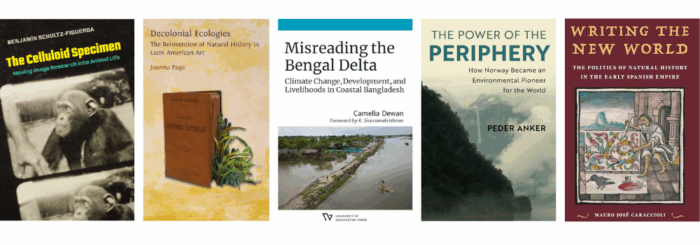
ACLS is proud to introduce the finalists in the environmental humanities category for the 2025 ACLS Open Access Book Prizes and Arcadia Open Access Publishing Awards. Supported by a generous grant from Arcadia, the prizes recognize and reward authors and publishers of exceptional, innovative, and open humanities books published from 2018 to 2023.
These works explore the complex relationships between humanity and the environment, offering critical insights into how ecological knowledge, climate politics, and environmental narratives are produced, challenged, and reimagined. Below, learn more about their compelling books, motivations behind their commitment to open access, and how these works are reaching broad communities impacted by environmental injustice.
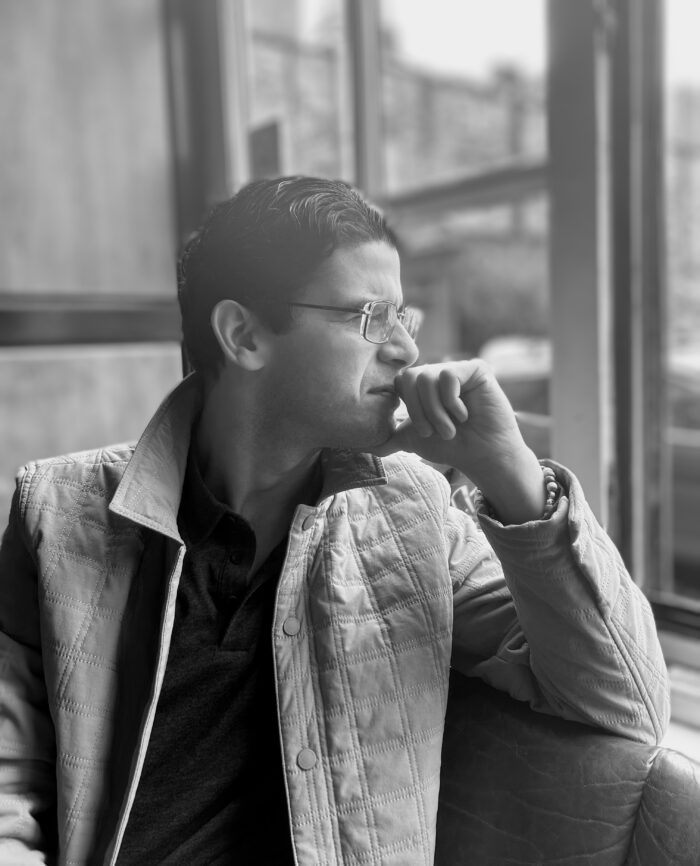
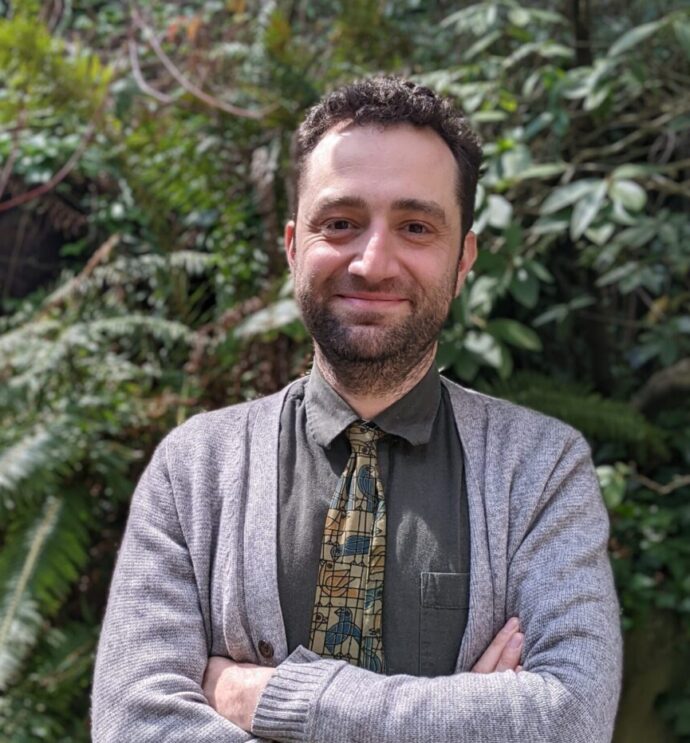
Assistant Professor of Film Studies, Seattle University
What is your book about?
The Celluloid Specimen: Moving Image Research of Animal Life reveals the central role of behaviorist cinema in generating psychosocial definitions of species, race, identity, and culture, that continue to shape our contemporary political and scientific discourses—a legacy that has been largely ignored by media scholars and science historians alike. I argue that these films uncover a dynamic field of behaviorist looking, where the distinctions between nature and culture were inscribed into animal images, generating concepts that broadly shaped the politics of immigration, labor relations, educational practice, and gender identity, well beyond the walls of the lab.

I argue that these films uncover a dynamic field of behaviorist looking, where the distinctions between nature and culture were inscribed into animal images, generating concepts that broadly shaped the politics of immigration, labor relations, educational practice and gender identity, well beyond the walls of the lab.
Benjamín Schultz-Figueroa
Why and how did you decide to pursue open access publication?
I was able to pursue open access publication thanks to my editor at UC Press, Raina Polivka, who suggested using the press’s Open Access Initiative, which funds the creation of open access books that began as dissertations written at University of California schools. Given the obscurity of much of the book’s subject matter and the wealth of unseen audiovisual material that I uncovered in the archives, it was decided that an online, open access publication would allow viewers a much greater involvement than would be possible otherwise.
Professor of Latin American Studies, University of Cambridge
Why did you decide to pursue open access publication?
I believe that publishing open access goes a long way to democratizing knowledge across the world. My research focuses on Latin America, where the cost of academic books is often prohibitive for individuals, and libraries do not always have the funds to purchase books. By publishing open access, I am making it more possible for the communities most connected to my work to be able to read it, free of charge.
What have been the benefits of publishing this work open access?
Publishing open access means that this book has circulated more quickly and more widely via social media, as everyone is keen to share a link to a free book. I also feel more at ease in spreading the news myself, as I know there will be no barriers to readers: I am not promoting something that they will have to pay to access. My hope is that publishing this book open access will encourage others to do the same, and in time that could bring about a revolution in how knowledge is shared across the world.
I believe that publishing open access goes a long way to democratizing knowledge across the world.
Joanna Page
Associate Professor (Docent) of Cultural Anthropology and Ethnography, Uppsala University
What is your book about?
Misreading the Bengal Delta critically examines how “climate change” has become a buzzword justifying donor-funded projects that misread the delta’s dynamic geomorphology and ignore its environmental history. Drawing on archival research, oral histories, and long-term ethnography, the monograph shows how climate discourse can obscure colonial legacies and Eurocentric assumptions shaping adaptation efforts. It critiques embankment infrastructures that disrupt sediment flows and socio-environmental rhythms, increasing vulnerability to floods and cyclones. The book also analyzes the socio-environmental impacts of saline aquaculture and high-yield, agrochemical rice cultivation, which threaten soil fertility, biodiversity, and livelihoods. By bridging decolonial anthropology, environmental history, and political ecology, it contributes to environmental humanities debates on knowledge, power, and justice in climate politics.
By bridging decolonial anthropology, environmental history, and political ecology, Misreading the Bengal Delta contributes to environmental humanities debates on knowledge, power, and justice in climate politics.
Camelia Dewan
Who is the audience for this book?
As a former development professional, I wrote Misreading the Bengal Delta accessibly for those working in Bangladesh, as well as students in development, anthropology, and South Asian studies. I also wrote it to provide a space for my Bangladeshi colleagues’ concerns about the future of waterways and the environment, so the book’s empirical findings might help shape future policy and development interventions. At the same time, the themes of climate knowledge production, environmental governance, and the socio-political dynamics of adaptation in vulnerable coastal and deltaic regions resonate far beyond South Asia. The book thus aims to speak to a wider audience of scholars, students, and practitioners in environmental humanities and critical climate social sciences globally.
Professor of History of Science, New York University
Who is the audience for this book?
Initially aimed at an academic audience, the book unexpectedly found resonance among global environmental activists due to its open-access availability. It explores how Norwegian scholar activists pioneered novel approaches to interacting with the natural world, now recognized as deep ecology. Delving into the radical activism of the 1970s and beyond, the book details the evolution of these ideas. Open access has broadened its reach, connecting with environmentalists worldwide, not only in English-speaking countries but also in Norway (of course), as well as in China, Nepal, Bhutan, South Africa, Kenya, Colombia, Ukraine, and beyond.
What have been the benefits of publishing this work open access?
The greatest benefit of open access has been distribution—broad, immediate, and global. As an added bonus, it also carries a smaller environmental footprint than printed books. I initially assumed open access would reduce royalties, but that hasn’t been the case; in fact, some readers choose to purchase the book after reading it online for free. Not that royalties were ever my motivation—my goal was always to share this message as widely as possible, and open access has made that possible.
The greatest benefit of open access has been distribution—broad, immediate, and global. As an added bonus, it also carries a smaller environmental footprint than printed books.
Peder Anker
Associate Professor of Political Science, Virginia Tech
How does your book contribute to your field?
Writing the New World is the first work of political theory that accounts for New World exploration and evangelization as a dual science of domination. Rather than portraying Spanish Imperialism as a project forged from abroad, I offer instead a more complex genesis of the political ideals proffered by the study of nature within the Americas. Natural history’s deployment led to enduring literary motifs in the representation of New World nature, as well as contentious depictions of a future colonial society. Spanish experiences of nature in the early modern period helped shape spiritual visions of the natural world, offered an adaptive discourse for empire, and called for a new map on which the future of civilization could be written.
Spanish experiences of nature in the early modern period helped shape spiritual visions of the natural world, offered an adaptive discourse for empire, and called for a new map on which the future of civilization could be written.
Mauro José Caraccioli
What has been your experience with open access publication?
While finishing the manuscript, I was able to participate in a highly generous grant program that Virginia Tech offered to faculty in the humanities for open access publication. The TOME (Toward an Open Monograph Ecosystem) initiative provided a substantive grant for open access with any university press that was a member of the Association of University Presses (AUPresses), and the book is featured in the TOME website for global reach, as well as on JSTOR and Project Muse. In addition to global distribution, open access publication has facilitated a greater number of invited talks, collaborations, reviews, and podcast interviews promoting the work
ACLS Open Access Book Prize + Arcadia Open Access Publishing Award
Supported by a generous three-year grant from Arcadia, these prizes recognize and reward the authors and publishers of exceptional, innovative, and open humanities scholarship. The winning title in each category receives dual awards.
Meet the Rest of the 2025 Open Access Book Prize Finalists
-
The 2025 multimodal finalists discuss their research and why they chose open access and a multimodal format.
News Article
July 15, 2025
-
The 2025 history finalists share insights about their research, publication experience, and why they chose open access.
News Article
July 14, 2025
-
The 2025 literary studies finalists offer vital contributions to the humanities that are freely accessible to readers worldwide.
News Article
August 5, 2025