Since I was raised in the Evangelical church, my primary definition of the word ‘fellowship’ growing up described either a room in the church (our sanctuary was called the “fellowship hall”) or, alternately, eating bagels together in the time between the first and second Sunday service (“fellowship time”). As I applied for and received fellowships that supported my PhD training, and even more so in my years as a Program Officer at ACLS, I took on the common professional definition of fellowship as “funded short term opportunity for research development.”
I wouldn’t want to undercut the monetary value of the support I’ve received or that ACLS provides, or the critical professional and moral work of stewarding those monetary resources (as my colleague Matt Sapienza discussed last month). But I’m becoming increasingly convinced that the most valuable resources we provide to many of our fellows take the form of “fellowship time”—not just in the sense of time to focus on individual research projects, but in a sense far more familiar to my younger self: intentional, repeated engagement with community.
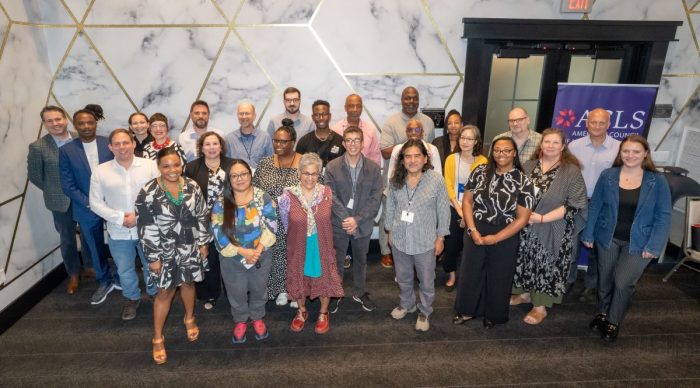
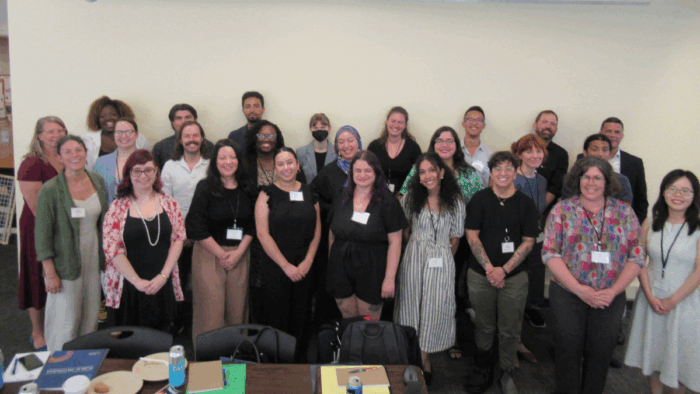
Across ACLS, we’ve observed and heard repeatedly that a supportive cohort of peers—whether in graduate school, in learned society programming, as part of a “research lab,” or scholars with shared interests undertaking challenging work on a similar timeframe—can be critical to success. One of the most important things we do for fellows is intentionally foster connections and design programming that helps fellows themselves to engage their community during and after their fellowship term.
One of the most important things we do for fellows is intentionally foster connections and design programming that helps fellows themselves to engage their community during and after their fellowship term.
This is particularly true in the case of the programs I’ve led in my seven years at ACLS, such as Mellon/ACLS Scholars and Society Fellowship Program and ACLS Leading Edge Fellowship Program, where fellows are often taking on new careers or switching methodologies to publicly-engaged work for the first time. Building, refining, and supporting a cohort-based model in these programs has yielded lessons both profound and practical, most recently in designing our new ACLS Graduate Internships on the Spiritual Infrastructure of the Future Program.
Funded by Templeton Religion Trust as part of a larger initiative exploring changing religious institutions in the United States today, the program provides practical summer work opportunities for PhD students studying topics in religion. It is driven in part by specific disciplinary questions (How are religious and spiritual changes happening in the United States today?), but the internships are also designed to demonstrate the value of humanistic training by giving graduate students the opportunity to complete important projects that enhance the mission of their host organizations.
As my program co-lead Jonathan Anjaria and I design a seminar and further trainings for this group, I find myself turning to lessons learned from other ACLS programs similarly focused on creating a cohort-based experience for fellows that sustains during and after the fellowship.
Cohort-building doesn’t necessarily happen after everyone has already arrived. Just as graduate admissions should take into account how a particular scholar is going to engage with, learn from, and contribute to a department or university community, we seek fellows who will take advantage of these kinds of resources. Starting from the beginning means cohort-building with a mind toward fellows’ eventual membership in a wider network of program alumni and partners, a network that might serve as a resource over the course of multiple decades of the alumni’s career, and that might generate collaborations between and amongst its various members.
We’ve started asking candidates for these programs, “When it comes to group learning environments, how do you show up as a cohort member?” I am not surprised to hear again and again that scholars seeking opportunities to go beyond their current training are seeking community, but I am frequently impressed by their thoughtfulness and genuine commitment to building relationships with their peers.
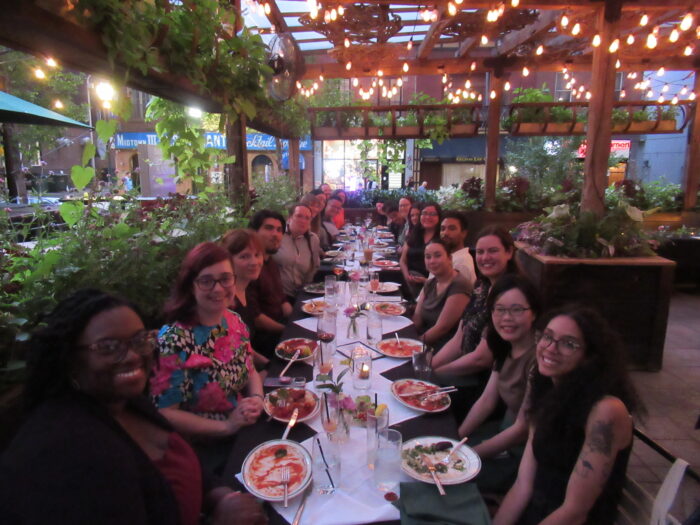
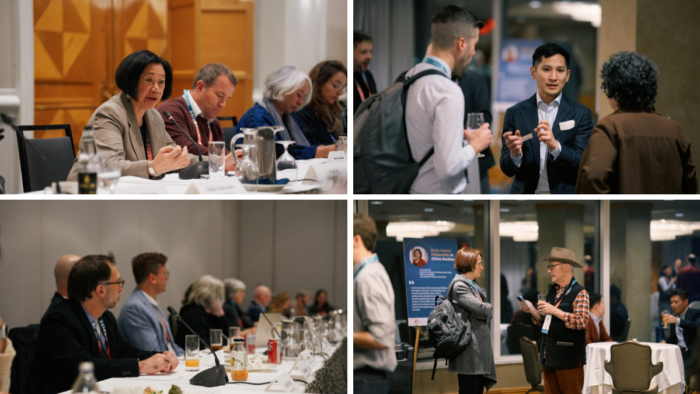
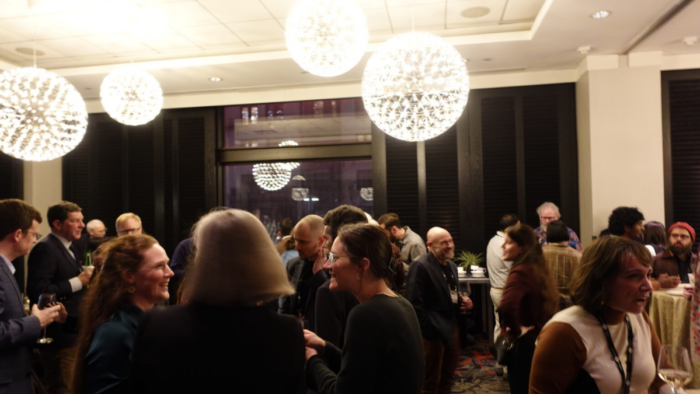
It’s a well-worn piece of advice both in community organizing and the public humanities that providing food, and the space for people to eat it together, is a surprisingly helpful technique for building goodwill towards trust. But in addition to providing the catering, facilitating these spaces with intentionality can help individuals learn how best to engage, and indeed to build through their own engagement, the very network they need as a resource. While it is not always possible to bring people together physically, it can present unique opportunities for a mix of directed and self-directed conversations and connections.
Particularly early in one’s career, and in moments of transition or disruption, “networking” can feel like trying to build a highway and drive on it at the same time. Having fellow travelers in this situation is critical both for advice and feedback. Recognizing that, we have made informal and formal connections with different participants a consistent part of these programs, including assigned peer-to-peer work as well as deeper opportunities for those interested in formal peer mentoring relationships. This also gives early-career scholars the chance to practice peer-to-peer mentorship as a skill, which my colleagues working on the Doctoral Futures initiative recently noted is a vital practice.
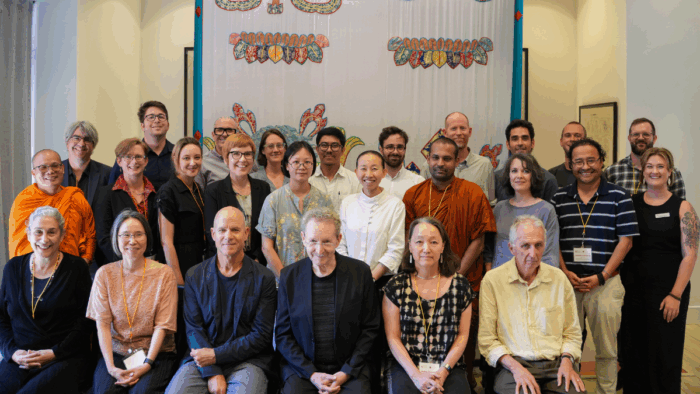
Giving participants “permission” to engage one another in this way can help a group of eager but reluctant scholars to break the ice and begin to form relationships with others with similar questions but diverse interests and backgrounds. These relationships often grow after the program ends or are strengthened and expanded in mentoring relationships with those who come into the program subsequently. Interconnected cohorts form the backbone of our generous and engaged community of past fellows in these programs.
We’re hoping to bring all of these lessons to bear in service of the 2026 Graduate Interns on the Spiritual Infrastructure of the Future, who in some cases have already begun publishing their work. In our virtual meetings and workshops thus far, in addition to their conviviality and curiousity about one another’s work, shared interests have already emerged, and possible collaborations are in the works. My team and I are already looking forward to convening these PhD students at the end of their internships in Philadelphia for some “fellowship time.” Our hope is that in addition to celebrating and sharing their good work, this will be another opportunity to foster their connections with one another and the larger ACLS community.

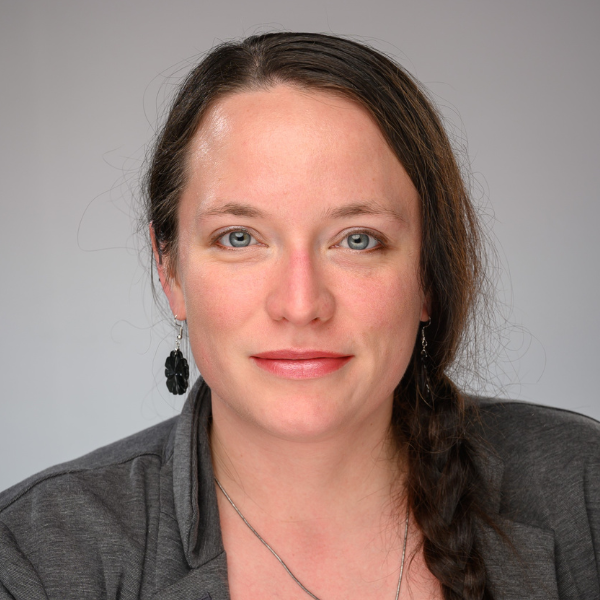
Desiree Barron-Callaci
ACLS Lead Program Officer in US Programs