

ACLS Community Message for January 2026
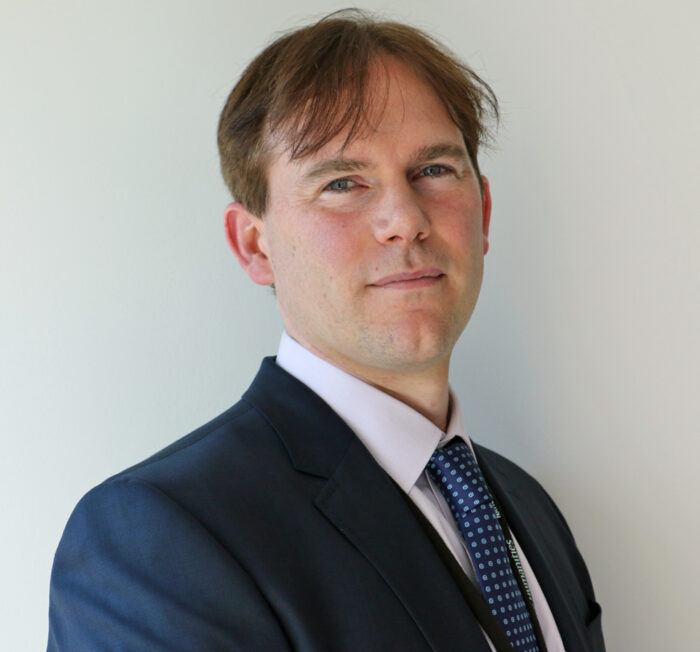
In 2018, I was hired to lead the Division of Research Programs at the National Endowment for the Humanities (NEH), the largest public funder of humanistic scholarship in the United States. I was not an obvious choice; my background in anthropology and archaeology made me more of a social scientist than a typical humanist, and my job experience since leaving academia had been focused on the social and earth sciences (to whit, I was once a well-known figure at the Society for Vertebrate Paleontology conference). The last time I had directly engaged with the more traditional humanities disciplines such as philosophy, history, and literature, I had been an undergraduate fulfilling core curriculum requirements. As I said, not an obvious choice to lead the nation’s efforts to sustain humanistic research.
Luckily, the NEH at the time was filled with some of the most dedicated civil servants this country has ever seen, and they patiently got me up to speed on the humanities landscape and lingo. While my humanities knowledge needed improvement, one thing I brought to the job was a passionate belief in foundational research – often called “basic research”: the quest for new knowledge and understanding about our world and ourselves. My staff became very familiar with my oft-used expression “the building blocks of knowledge” to describe the outcomes of foundational research funding. They heard me tell more than once the story of Dr. Katalin Kariko, a research scientist who struggled for decades to support her foundational research into mRNA. While many colleagues and administrators found her methodical research into the structure and functioning of mRNA rather tedious, Kariko’s results allowed for the quick and rapid development of COVID-19 vaccines, saving millions of lives and earning her a Nobel Prize. While foundational humanities research is unlikely to save lives so directly, it can certainly change lives for the better—like Kariko’s research, the “return on investment” is not always obvious and rarely immediate.
In my time as Director of Research Programs for the NEH, I became an outspoken proselytizer for the need to increase funding for foundational research, particularly in the humanities and social sciences. With bipartisan support over two very different administrations, I saw my division’s grantmaking grow from $15.5 million when I started to over $20 million when I left in 2025. We launched many new programs and initiatives, built relationships with foreign entities to increase international scholarly collaborations, and became a more active partner to sister organizations like the National Science Foundation (NSF) and the Office of Science and Technology Policy (OSTP). We also strengthened our relationships with non-profit organizations, such as ACLS, who shared our belief in supporting foundational research. These were heady days and, at the time, we saw only blue skies ahead. <Cue the foreshadowing music>
The current administration’s wholesale assault on this nation’s research infrastructure last year was unprecedented and, in my opinion, entirely self-destructive. The attack on institutions of higher education, including the cancelation of federal grants in science, medicine, and education, set this country’s research and development goals back significantly, while the gutting of federal granting agencies (including the NEH) has rendered the government inoperable for years to come.
I would argue that we are in this mess because of a devaluing of humanistic scholarship and that we need more research, not less, to understand why this country has reached this point and how we can get out of it. Christopher Thornton
In such a chaotic mess, with millions of people already unemployed or at risk of losing their jobs, it’s hard to see how arguing for increased support for humanistic inquiry makes a lot of sense. I would argue that we are in this mess because of a devaluing of humanistic scholarship and that we need more research, not less, to understand why this country has reached this point and how we can get out of it. As I have said many times before, scientists will not solve climate change, medical researchers will not convince people to become vaccinated, and engineers will not stop gun violence. Only the humanities and social sciences can provide answers to these and other ‘wicked’ problems.
Unfortunately, fewer and fewer organizations today continue to share my passion and conviction for foundational research in the humanities and social sciences. The rise of the #MeToo and Black Lives Matter movements as well as the disruptions caused by the financial crisis of 2008 and the COVID pandemic led many foundations to rethink their grantmaking away from the high-risk/high-reward model of “scattershot” funding (e.g., humanities research fellowships) to more applied, impact-focused grant programs seeking social justice and humanitarian outcomes for under-resourced groups. Such applied research programs are indeed important for bringing humanistic knowledge out of the academy and into activist communities in need of fresh ideas, but their long-term impact on humanistic scholarship and public discourse is not well understood. But this is not a binary choice. There is a balance to be struck between funding long-term “R&D” in the humanities and social sciences and funding short-term public programs. Unfortunately, few organizations today support both.
ACLS is an exception. Under Joy Connolly’s leadership, ACLS has built new social justice and community-focused programs while continuing to support foundational research in the humanities and social sciences. From my post at the NEH, I saw ACLS as a closely aligned partner—the non-profit yin to our yang—and relied on ACLS colleagues for advice and support in many endeavors. Thus, when a position opened at ACLS to oversee their fellowship and grant programs, I jumped at the opportunity.
Friends and family members often ask me what I enjoy most about my job as a grantmaker. It’s a hard question. I love reading applications and learning more about such diverse topics as Ottoman legal history, American religious currents, Tang dynasty sculptural arts, or Peruvian poet César Vallejo. I love perusing the peer reviewers’ comments on these applications, with their piercing insights and their ability to contextualize new research within existing discourses. And I love designing new programs and streamlining existing processes, finding solutions for the needs of scholars but also alleviating unnecessary burdens on my staff (perfect being the enemy of good when it comes to grantmaking processes). But most importantly, I love hearing from grantees years later who tell me how our award made such a difference in their lives—how it boosted their confidence and kept them going through dark times, or how it allowed them to expand their research in new directions or with new collaborations.
As I enter 2026 with renewed hope and resolve to fight for my belief in the pursuit of humanistic inquiry, I am grateful to be at ACLS, surrounded by such excellent colleagues and emboldened by the thoughtful leadership of Joy Connolly and our Board of Directors. I look forward to getting to know the wider ACLS network and finding ways to work with the learned societies, institutions of higher learning, and individuals who share my passion for research in the humanities and social sciences.
Christopher Thornton
ACLS Senior Director of US and International Programs