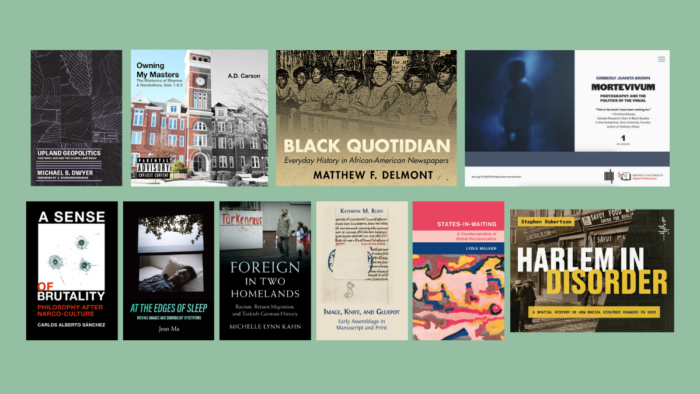
For many finalist authors of the 2026 ACLS Open Access Book Prizes, open access has transformed what a scholarly book is “supposed” to look like. The digital, open format encourages innovation and accessibility, allowing their work to include hyperlinked, multi-layered narratives, experiment with chapter length and archival materials, and give readers control over how they engage with difficult images. While they may challenge traditional expectations, these open access monographs remain peer-reviewed, rigorous, and field-defining, contributing to the author’s scholarly careers, including tenure and promotion.
ACLS spoke with the finalists of the 2026 ACLS Open Access Book Prizes and Arcadia Open Access Publishing Awards, supported by a generous grant from Arcadia, about their books and how open access shaped both the writing and the reception of their work. Below, read how these authors are pushing the boundaries of scholarly writing and publishing.
Finalist category: Political Science
“A Sense of Brutality was the first book to treat Mexican narco-culture as a point of departure for thinking about the nature and limits of violence, culture, and personhood. Since its publication, a sub-genre of philosophical engagement with narco-culture has flourished.
Before the publication of this book in 2020, philosophers had seldom thought about narco-culture as worthy of philosophical investigation. The appearance of this book changed that. Philosophers have since turned their attention to narco-culture and engaged with the themes that the book highlights: culture, personhood, social ontology, and extreme violence. The growth of the subgenre indicates that this book’s publication helped establish a new focus for contemporary social and political philosophy.”
“In the midst of writing, I realized that the book’s content and approach was not suited to the standard format of the academic monograph. Breaking down the book into a larger number of chapters shorter than the typical length was better suited to the goal of combining a deep dive into Apichatpong’s corpus with a multi-pronged investigation of the broader topic of sleep. My earlier decision to publish the book on a new, nontraditional platform gave me the courage to embrace a creative approach and to adopt an unconventional structure.”

I have come to view scholarly communication, via social media and elsewhere, as an everyday process rather than something that happens intermittently, at conferences, or solely through articles and books. Scalar’s open-access format makes it possible to share primary sources about events and people—such as basketball and tennis star Ora Washington, Ghana’s independence, and Cleveland businessman and hairdresser Wilbert Black—with popular audiences in ways that simply are not possible in traditional print forms.
Matthew F. Delmont
Finalist category: Multimodal
“Black Quotidian could only exist digitally and was intentionally designed to be different from a print monograph or journal article. I have come to view scholarly communication, via social media and elsewhere, as an everyday process rather than something that happens intermittently, at conferences, or solely through articles and books. Scalar’s open-access format makes it possible to share primary sources about events and people—such as basketball and tennis star Ora Washington, Ghana’s independence, and Cleveland businessman and hairdresser Wilbert Black—with popular audiences in ways that simply are not possible in traditional print forms.
I am thrilled that since the project was published in 2019, it has averaged nearly 25,000 unique visitors and over 170,000 page views per year, with more than 80,000 unique visitors and over 276,000 page views in 2025.”
Finalist category: History
“I earned tenure in 2024, due largely to this book. The high quality of the book, and particularly the fact that it was published open access, were praised by the external evaluators of my tenure file. The positive reception of the book will also substantially impact my promotion process. For example, I was awarded a highly competitive and prestigious National Humanities Center Fellowship, which requires a first book to be eligible to apply.”
Finalist category: Multimodal
“The book uses the digital medium to adapt the monograph form to fit the argument about the complexity of the new form of racial violence. It is a multi-layered, hyperlinked narrative that connects different scales of analysis: individual events, aggregated patterns, and a chronological narrative. A focus on individual events and naming the participants counters how data can dehumanize the past. It also allows transparency in how sources are interpreted and how the narrative of each event was constructed.”
Before 2017 I published in hard copy because the decision-makers at my university only respected traditional hardcover books for tenure and promotion. Now the tides have changed, and my university has fully embraced open access —I have no plans to present my new research in any format other than OA.
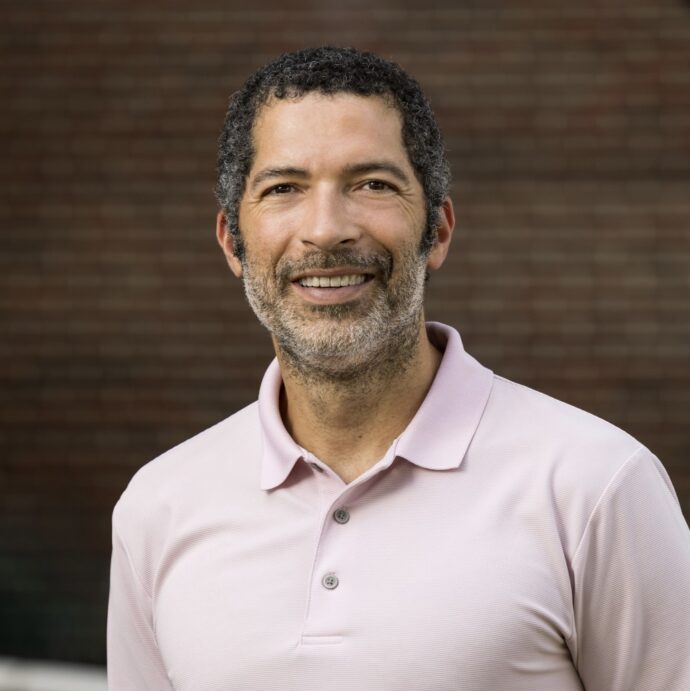
Kathryn M. Rudy
“Before 2017 I published in hard copy because the decision-makers at my university only respected traditional hardcover books for tenure and promotion. Now the tides have changed, and my university has fully embraced open access [OA]—I have no plans to present my new research in any format other than OA.
Open Book Publishers creates high-quality books by relying on qualified external reviewers, whose gentle criticism has always improved the final version. Actively lobbying for the benefits of OA publishing has helped legitimate it for my younger colleagues. With the metrics that Open Book Publishers collects, I can show my supervisors that this book has had well over 18,000 views and downloads.”
Finalist category: Multimodal
“The multimodal edition employs a Consentful Tech framework, or the intentional development and use of technology to create safety, to prioritize care, and to foreground consent in order to mitigate trauma. Readers are given agency in determining how and for how long they view challenging images.
Exploring a space between evidence and erasure, the Brown University Digital Publications design team deeply considered how to transform these images for various audiences. An icon indicates that viewers may opt to see more of an altered image, but only if they choose to do so. By including images that do the work without doing the damage, the multimodal edition introduces a new form of visual literacy that comes through agency.”
The multimodal edition employs a Consentful Tech framework, or the intentional development and use of technology to create safety, to prioritize care, and to foreground consent in order to mitigate trauma. Readers are given agency in determining how and for how long they view challenging images.
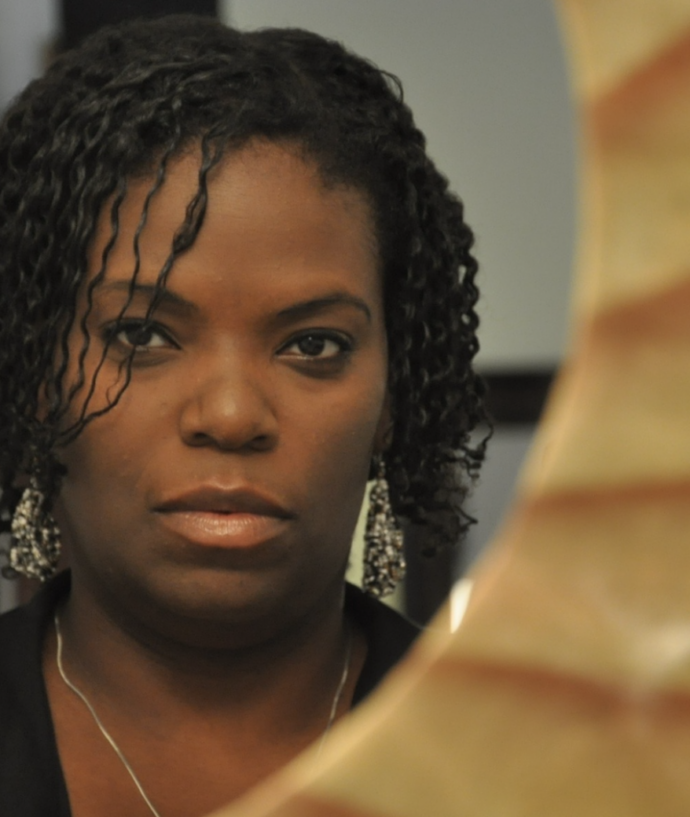
Kimberly Juanita Brown
Finalist category: Multimodal
“While lots of academic attention has been paid to hip-hop since the 1990s, much of that work has accepted the notion that rap and rappers are subjects (and objects) to be studied rather than means by which study is done by students of the world (or wherever any rapper may focus their attention). Owning My Masters takes on this exclusion of rap and rappers in its form and function to challenge prevailing notions of what, exactly, is academic in the study of and through hip-hop and its forms.”
Finalist category: History
“States-in-Waiting offers a major intervention in the history of decolonization by shifting attention from successful nation-states to the nationalist claimants whose bids for sovereignty remained unrecognized. The book demonstrates that international recognition during decolonization was politically contingent, often favoring groups that had mobilized earlier under empire or could leverage colonial power structures. . . . The book enriches humanistic scholarship more broadly by foregrounding marginalized archives and challenging assumed definitions of decolonization, sovereignty, and the state.”
Finalist category: Anthropology
“A great deal of attention has gone to the surge in transnational farmland deals over the last decade-plus (the “global land rush”), but less attention has gone to how local context – specifically local histories of cold-war conflict – have plowed the furrow for land grabs. My historical and ethnographic examination of land grabbing in contemporary Laos showcases the utility of these methods for audiences who are often more accustomed to a high-level view of land grabbing that privileges things like bilateral relations or authoritarian government.”
2026 Open Access Book Prize Finalists
The ACLS Open Access Book Prizes and Arcadia Open Access Publishing Awards recognize and reward the authors and publishers of exceptional, innovative, and open humanities scholarship.