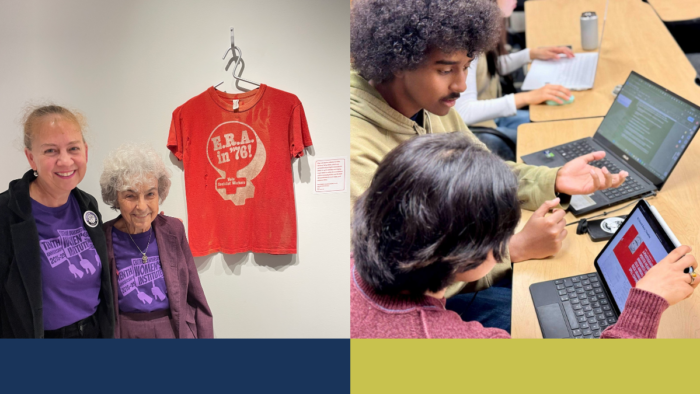
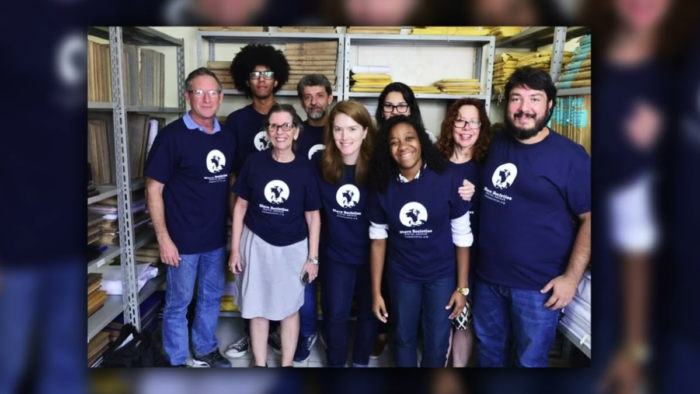
Jessie B. Ramey with Kipp Dawson; Student researchers working on the Environmental Injustice Global Record
“We realize that American scholarship…devotes itself rather narrowly to Western civilization, to the rather well worked fields of the modern languages and literature, to classical studies and modern and medieval history, ancient history and related studies; and that it would be a great advantage to us if the scope of our interest should be broadened to take in the cultures of the entire world.”
This guidance was shared in 1941 by Waldo G. Leland, a former ACLS Director. More than 80 years later as we face an increasingly hostile climate toward the humanities and social sciences, his words serve as an important reminder of our foundational values.
Attacks on the scholarly enterprise and expertise accelerated sharply in 2025, with the humanities and social sciences hit especially hard. Executive orders issued by the White House called out ethnic, gender and sexuality, and environmental studies resulting in severe federal funding cuts for research and curriculum censorship.
The intensity of these attacks harken back to McCarthy-era allegations reported by a House committee that ACLS dominated American higher education by serving as a “clearinghouse” for subversive ideas, including “internationalism” and “moral relativism.”
ALCS stood firm then, as it does now, in its commitment to support the creation and circulation of knowledge in fields and areas of study that, together, can provide a complete picture of the human experience.
Our society seems hopelessly polarized these days, but fortunately the ACLS continues its work supporting scholars in our quest to try to better understand our fellow human beings through the humanities.
Antonio Ramirez, 2019 Mellon/ACLS Community College Faculty Fellow and 2025 Community College Faculty Research Fellow
Associate Professor of History at Elgin Community College
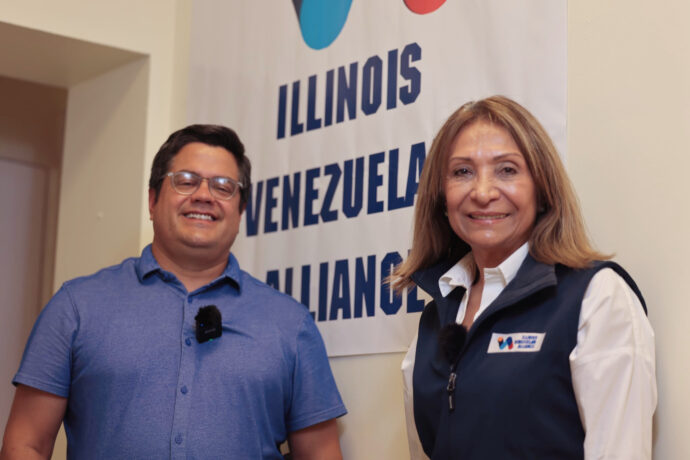
Photo: Antonio Ramirez with Dr. Ana Gil-Garcia, founder of the Illinois Venezuelan Alliance
“I am honored to have the support of the ACLS during this important moment in American history. Our society seems hopelessly polarized these days, but fortunately the ACLS continues its work supporting scholars in our quest to try to better understand our fellow human beings through the humanities,” said Antonio Ramirez, Associate Professor of History at Elgin Community College and Project Director of Chicagolandia, an online oral history archive documenting the 70 year history of Latinos living in Chicago’s suburbs. He used his 2019 Mellon/ACLS Community College Faculty Fellowship and 2025 Community College Faculty Research Fellowship to further develop the platform and related materials.
“Federal funding cuts in my area of research have been dramatic. ACLS support has provided an alternative, and through programs that expressly validate research focused on equity, inclusivity, transnationalism, environmental sustainability and other topics now censured by funders like the National Science Foundation,” explained 2024 ACLS Digital Justice Grantee Kim Fortun, Professor of Anthropology and Director of EcoGovLab at the University of California, Irvine. She heads the Environmental Injustice Global Record, an expansive digital archive and collaboration space designed to address environmental injustice in settings around the world.
Diversity in scholarship has long been a part of the ACLS approach to supporting and advancing humanistic fields. Our record of inclusive excellence in humanities scholarship includes convening committees of researchers in the 1920s to explore China Studies and Native American Languages, then new areas of scholarship. In the 1940s we marshalled organizations to create microfilm copies of all African American newspapers published before 1900 to be permanently stored by the Library of Congress. In the 1980s we supported the research of John D’Emilio, Professor emeritus at the University of Illinois Chicago and a pioneer in LGBTQ Studies. Our diverse community of scholars and scholarship continues to reflect this important commitment.
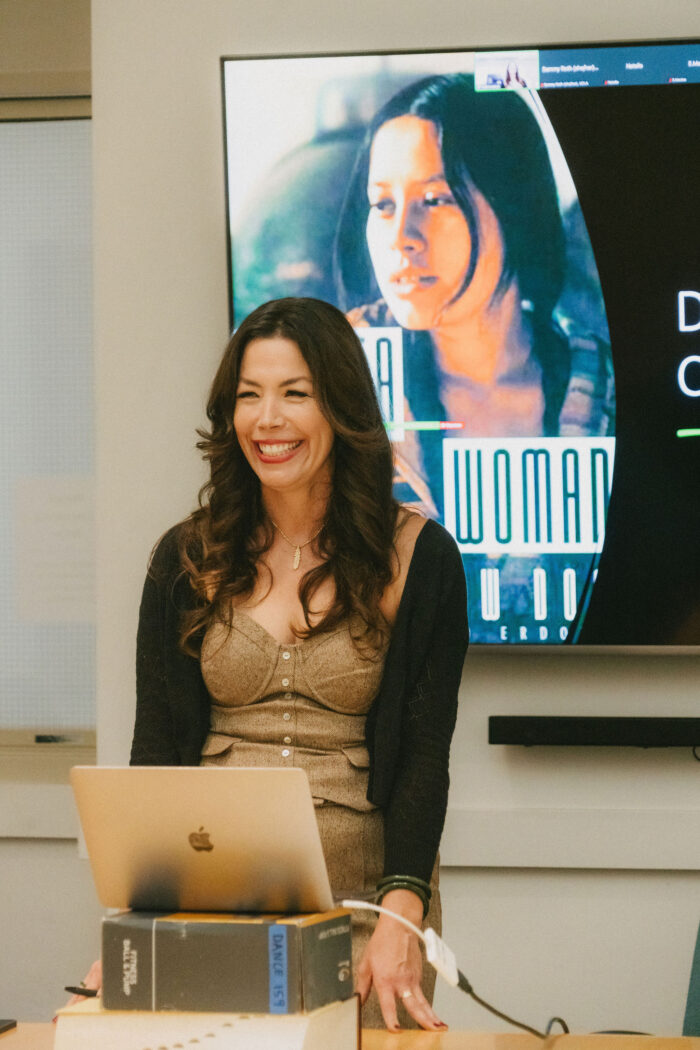
Tria Blu Wakpa
“ACLS support is particularly critical in this sociopolitical moment as state and federal governments have slashed awards for projects focused on Native American, ethnic, and gender studies,” noted 2025 ACLS Fellow Tria Blu Wakpa, Assistant Professor of Dance Studies in the Department of World Arts and Cultures/Dance at the University of California, Los Angeles. “Considering this context, it is all the more important to illuminate the enduring inequities that Indigenous peoples face and their powerful and plentiful contributions.”
Jessie B. Ramey agrees. The Founding Director of the Women’s Institute and Associate Professor of Women’s and Gender Studies and History at Chatham University received a 2025 ACLS Fellowship to support her research on activist, coal miner, and educator Kipp Dawson, whose contributions span the Civil Rights, free speech, women’s rights, gay liberation, labor, and education justice movements. “This is precisely the history at the center of censorship battles right now… Dawson’s story offers an urgent antidote to these attempts to erase the legacy of our collective history of resistance. Her story also demonstrates the power of ordinary people working together to strengthen our democracy.”
In addition to supporting established scholars and research projects, ACLS support for fields under attack provides hope and inspiration for emerging scholars faced with increasingly discouraging messages about the validity and usefulness of their research fields.
“At a time when humanistic research is often misunderstood, the ACLS award has strengthened my commitment to producing scholarship that is historically grounded, analytically rigorous, and publicly engaged. It has made clear that the work of the humanities is not only worth defending, but necessary,” said 2025 ACLS Fellow Udodiri R. Okwandu, Presidential Postdoctoral Fellow and incoming Assistant Professor (Fall 2026) in the Department of Women’s, Gender, and Sexuality Studies at Rutgers University-New Brunswick. Her research examines the ways in which scientific and psychiatric knowledge have shaped racialized ideals of motherhood and informed policies that continue to structure maternal health, and its disparities, today. “The ACLS investment in my work affirms that historical scholarship is not peripheral to contemporary debates, but central to understanding how inequities are produced, rationalized, and sustained over time.”
Joy Connolly shares how ACLS is standing with scholars and societies defending academic freedom and humanistic inquiry against censorship, defunding, and political interference.
ACLS Digital Justice Grantees combine machine learning with hands-on training for HBCU students to democratize access to overlooked historical records .