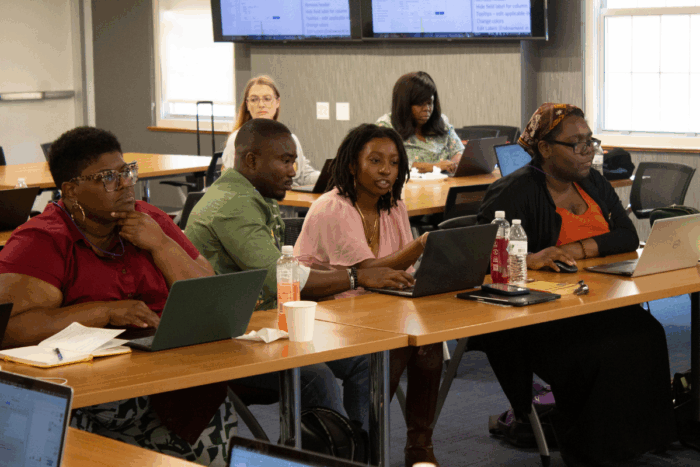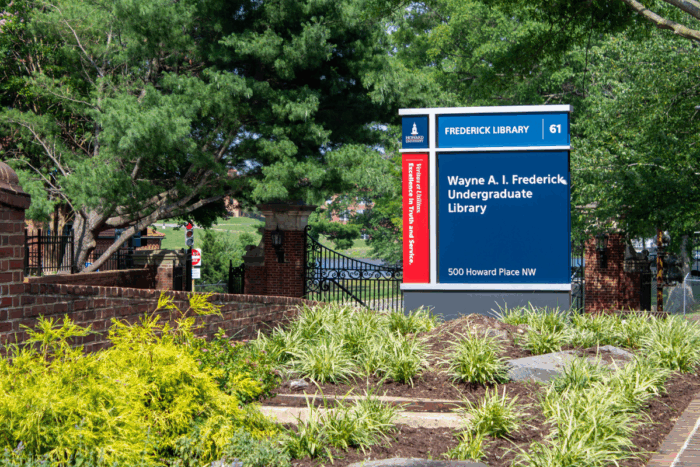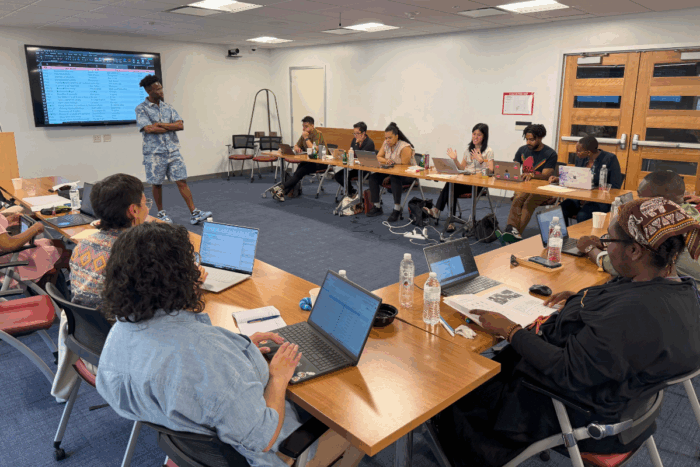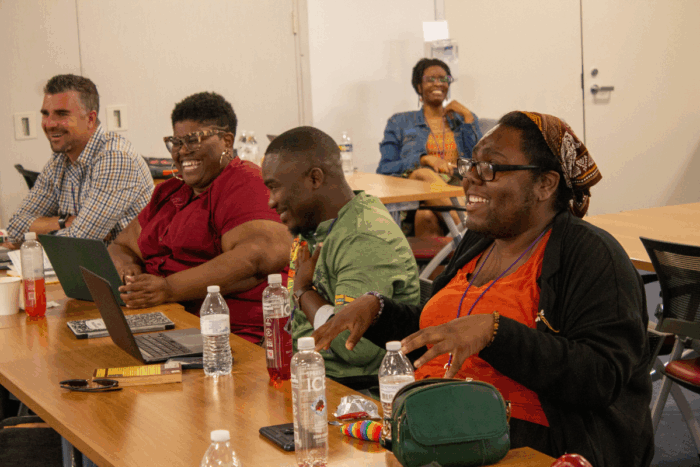

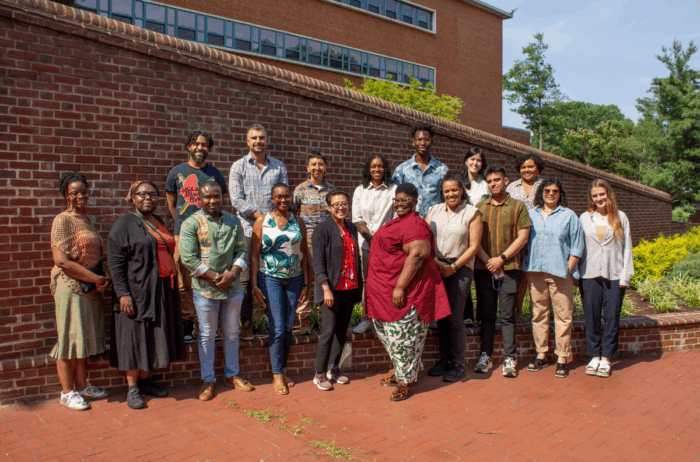
In spring 2025, the American Council of Learned Societies (ACLS) hosted a Collaboratory on Data Storytelling as part of the Intention Foundry (IF) series, Beyond Precarity: Incubators for Secure Futures. The collaboratory offered technical skills-training to early-career scholars, contextualized to demonstrate data storytelling’s capacity as a tool for advocacy and coalition building within and beyond the academy. It culminated in an in-person retreat at Howard University in Washington, D.C., from June 10-13, 2025, with more than 20 participants, including IF scholars, the IF Incubator Steering Committee, speakers, and ACLS staff.
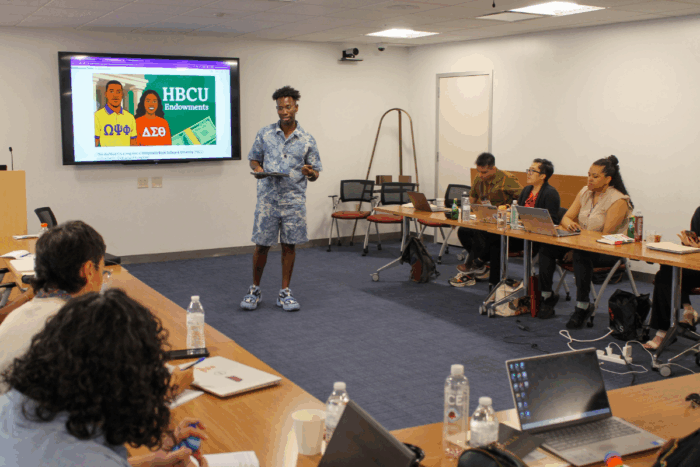
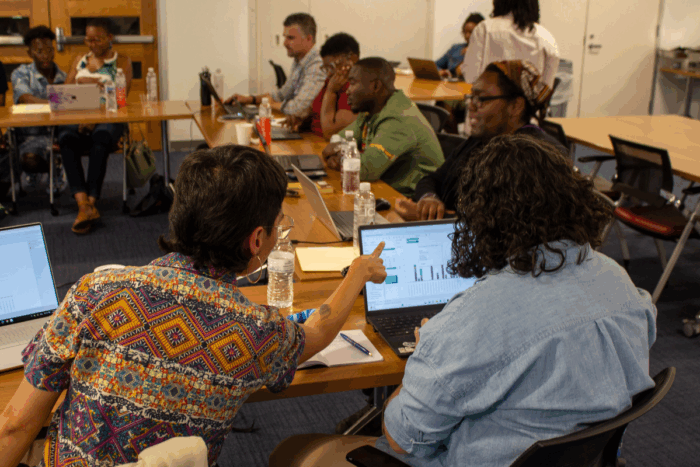
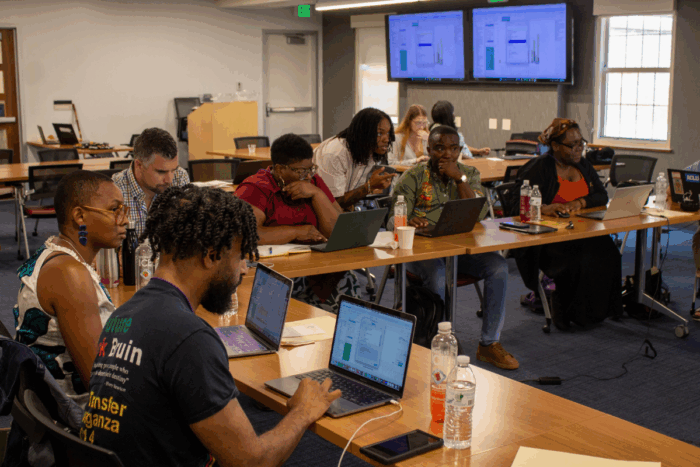
The retreat included a multi-day workshop on the data visualization platform Tableau Public, which encouraged scholars to think about how the platform can be a useful tool for their scholarship, including engaging a broader public. The workshop was led by Kenton Rambsy, Professor of African American Literature and Data storytelling & Visualization Specialist at the Center for Applied Data Science and Analytics and member of the Spring 2025 IF Incubator Steering Committee, and two of his interns at the Black Data Lab, Emily Duru, a PhD student in English, and Cierra Larke, a recent graduate from the Howard data science program. They used data comparing the endowments of Historically Black Colleges and Universities (HBCUs) and those of Predominantly White Institutions (PWIs) to practice building data visualizations, surface patterns of systemic underfunding at these institutions, and consider the potential impact that funding cuts at well-resourced PWIs and might have on HBCUs.
“The Intention Foundry retreat demonstrated how data storytelling can clarify urgent problems and prepare scholars to engage broader publics,” said Kenton Rambsy. “Howard provided a fitting setting for this work. We used the institute to cultivate technical fluency, historical awareness, and collective insight. It was a clear example of what becomes possible when equity-focused pedagogy meets the tools of data analysis.”
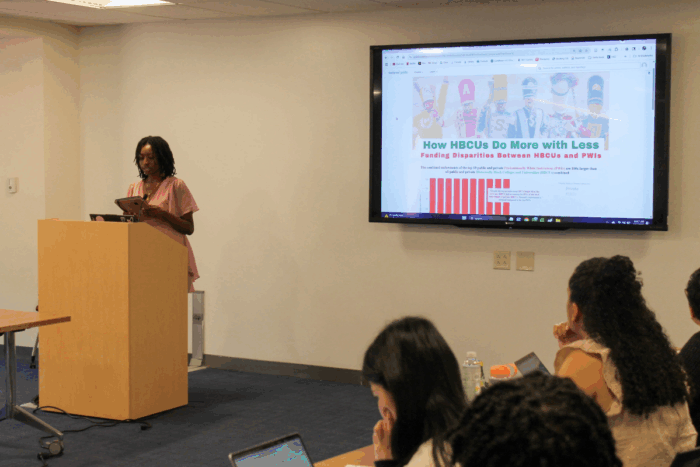
Audience, Advocacy, and Academia,” featuring ACLS Leading Edge Fellows and a Mellon/ACLS Public Fellow. Both fellowship programs demonstrate the potential of humanities and social sciences PhDs to solve problems and build capacity in organizations outside academia. The panel included:
In conversation with ACLS Senior Program Officer Keyanah Nurse, they discussed how the term data is defined, the importance of storytelling in shaping public narratives, and the transferrable skills from their humanities and social sciences PhDs that they have used in their careers.
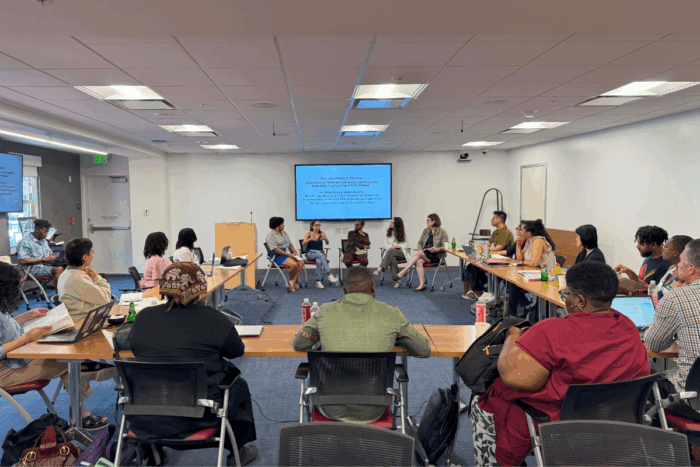
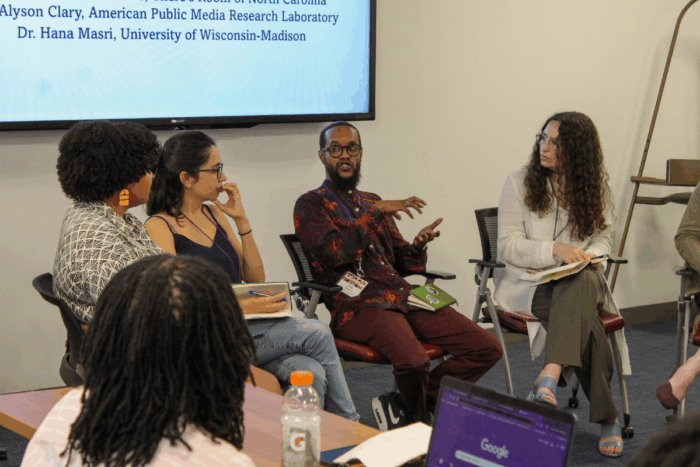

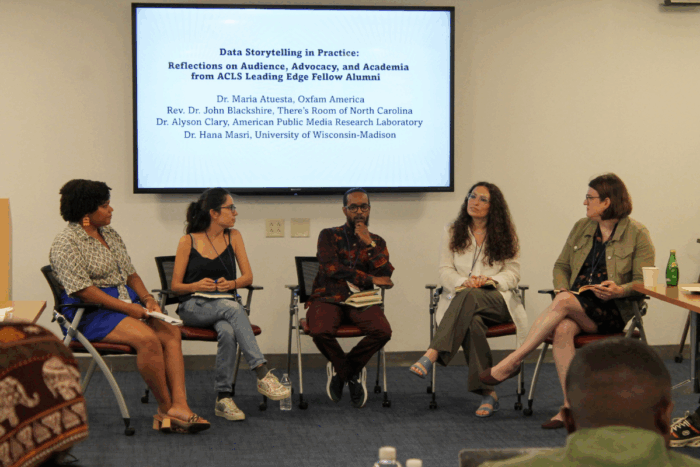
“This retreat offered the rare opportunity for experts to experience being students again,” said Keyanah Nurse, ACLS Senior Program Officer for Intentional Design for an Equitable Academy (IDEA) Programs, “It did so by way of offering a workshop on a new technical skill, but also through space to consider alternative ways of navigating the role of the scholar in our current moment.”
With funding from the Mellon Foundation, ACLS established the Intention Foundry (IF) in 2021 as a multi-year series of workshops in which ACLS member societies collaborated with early-career scholars and higher education administrators to develop and pilot actionable solutions to advancing equity, inclusion, and justice in their fields. In 2024, the program shifted to include two branches: the Beyond Precarity: Incubators for Secure Futures series, which provides opportunities for early-career scholars to collaborate, learn new transformative skills, and imagine future directions for higher education; and the ACLS Learned Society Extended Engagement Microgrants, which support initiatives by ACLS member societies designed to counteract practices and systems that create precarity for early career scholars.