ACLS Fellows Share Expertise on Birthright Citizenship
Published: December 11, 2025
Birthright citizenship—the guarantee in the Fourteenth Amendment that anyone born on US soil is a citizen—continues to be a central issue in American politics. An executive order issued in January 2025 challenged the principle, sparking debates in Congress, federal courts, and ultimately the US Supreme Court this summer.
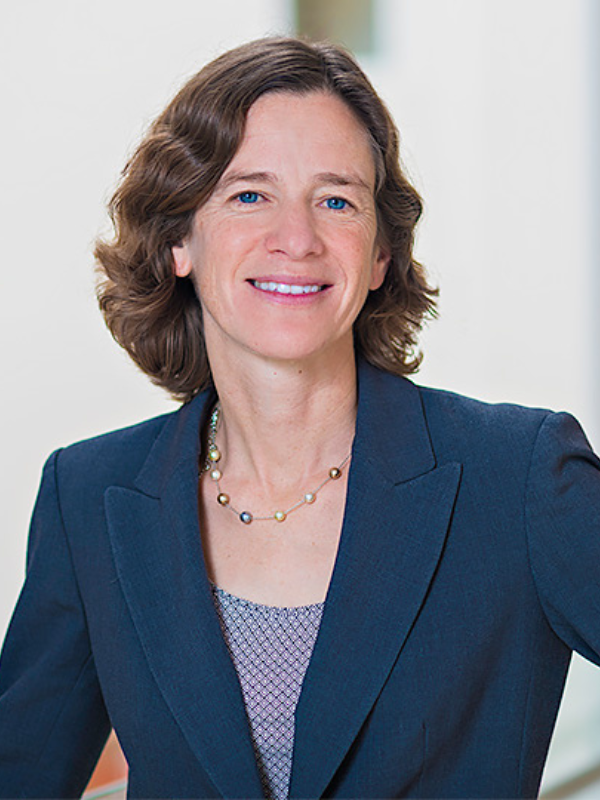
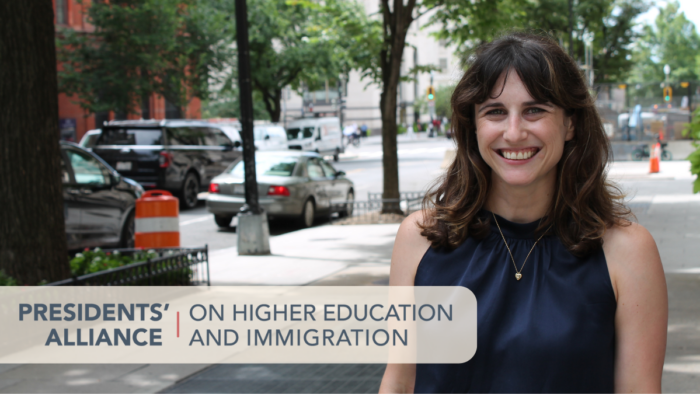
Amanda Frost
At moments like these, humanities and social science research provide critical historical, social, and legal context. Recently, several ACLS fellows have been at the forefront of shaping public understanding and informing policymakers on the issue of birthright citizenship.
One such scholar is Amanda Frost, David Lurton Massee, Jr., Professor of Law at the University of Virginia and 2019 ACLS Fellow. Frost received support from ACLS for her research on the US government’s history of stripping citizenship from both naturalized and native-born Americans, culminating in her book You Are Not American: Citizenship Stripping from Dred Scott to the Dreamers (Penguin Random House, 2022).
“Historians have significantly contributed to the legal debate around birthright citizenship debate by describing the context in which the Fourteenth Amendment was debated and ratified between 1866 and 1868,” Frost said. “Just as important, social scientists can explain the benefits of birthright citizenship to the nation—particularly in integrating new immigrants and their families—as well as the devastating impact that altering the rule of universal birthright citizenship would have on the nation.”
Historians have significantly contributed to the legal debate around birthright citizenship debate by describing the context in which the Fourteenth Amendment was debated and ratified between 1866 and 1868. Just as important, social scientists can explain the benefits of birthright citizenship to the nation.
Amanda Frost
David Lurton Massee, Jr., Professor of Law, University of Virginia
Using her research and scholarly expertise, Frost testified before the US House of Representatives in February 2025 and submitted an amicus brief to the Supreme Court in June 2025 on the meaning of birthright citizenship and the Fourteenth Amendment. She has also contributed to increasing understanding among the broader public with appearances on NPR and PBS News Hour.
“The Fourteenth Amendment’s overarching purpose was to end a caste system in which some people had more rights under the law than others,” Frost wrote in a recent piece for The Atlantic. “To be sure, that ideal has always been a work in progress. But many opponents of birthright citizenship don’t even hold out that ideal as a goal; they would rather bring caste back, and enshrine it in our laws.”
Martha S. Jones, 2013 ACLS Fellow, and Kate Masur, 2020 Charles A. Ryskamp Research Fellow, also submitted an historians’ amicus brief in New Jersey v. Trump, providing necessary historical context for the Fourteenth Amendment’s citizenship guarantee. Jones, the Society of Black Alumni Presidential Professor and Professor of History at Johns Hopkins University, and Masur, John D. MacArthur Professor of History at Northwestern University, also joined a June 2025 panel discussion on “The Guarantee of Birthright Citizenship,” hosted by the Brennan Center for Justice and the Organization of American Historians, an ACLS member society.
Jones’ ACLS Fellowship supported the writing of her book Birthright Citizens: A History of Race and Rights in Antebellum America (Cambridge University Press, 2018), which firmly roots the early American battles over citizenship in the politics of Black Americans. Her work overturned the long-standing view that citizenship only became a question in US legal history during Reconstruction, and she has become one of the foremost authorities on birthright citizenship, appearing in the Washington Post, TheAtlantic, on PBS, and more.
“We have grappled in every generation, as we are doing today, with the question of who belongs and by what terms,” Jones noted in the New York Times in January 2025. “Citizenship has always been highly contested and changeable in this country.”
As historians have always done in challenging times, we continue to work diligently to make the production of new knowledge and the power of historical storytelling part of the everyday deliberations in American politics and culture.
Martha S. Jones F’13
Society of Black Alumni Presidential Professor and Professor of History, Johns Hopkins University
Kate Masur, photo credit Sean Su
As challenges to birthright citizenship intensify, scholars are working to keep public debate grounded in historical fact, reminding us that today’s legal arguments stem from long-standing questions about rights and national belonging.
“Scholarly research founded on time-tested methods and professional ethics can help counter the biased accounts sometimes put forward by politicians or attorneys to serve their own interests,” said Masur. “Scholars have honed expertise over years of training, researching, and being evaluated by our peers. Unfortunately, however, in our culture expertise is often devalued.”
Despite the challenges for scholars in today’s environment, Jones told ACLS that she has seen a renewed interest in turning to history to make sense of our current moment among federal judges, journalists, civil rights organizations, and more.
“As historians have always done in challenging times, we continue to work diligently to make the production of new knowledge and the power of historical storytelling part of the everyday deliberations in American politics and culture,” Jones said.
Hear from first-generation scholars at multiple career stages about how mentorship, community, and support through fellowships have shaped their research and paths in higher education.
Trushna Parekh F’24, Lamon B. Lawhorn G’24, and Ana Lucia Araujo F’24 share their research and the impact of the ACLS HBCU Faculty Fellowship and Grant Program.