“How do you define ‘innovation’?” As the program officer overseeing the Mellon/ACLS Dissertation Innovation Fellowship, this is the question I’m asked most frequently. I always have the same answer, which I suspect many believe is a way of dodging the question: it varies from field to field.
This answer is not meant as subterfuge.The Mellon/ACLS Dissertation Innovation Fellowship program supports innovation in the humanities and social sciences to elevate scholars and research that have the potential to make change not just in the academy, but more widely in our world. In supporting emerging scholars as they embark upon groundbreaking work, our goal is not only to urge academic disciplines to accept a more expansive definition of doctoral research and scholarship, but to also encourage graduate students to think about wider audiences for their research. Aligning with the ACLS vision of a “new academy,” the program dovetails with our work on graduate education through initiatives like Doctoral Futures and our report on Preparing Publicly Engaged Scholars.
What is common practice, theory, or methodology in one field could be groundbreaking in another. I often tell prospective applicants to consider the “traditional” trajectory of doctoral work in their discipline, and whether the work that they propose to do pushes beyond those norms. What are the typical scholarly products produced in your field? What are the most prevalent methods employed by scholars in your discipline? Does your work, in some way, push outside of these standards?
In supporting emerging scholars as they embark upon groundbreaking work, our goal is not only to urge academic disciplines to accept a more expansive definition of doctoral research and scholarship, but to also encourage graduate students to think about wider audiences for their research.
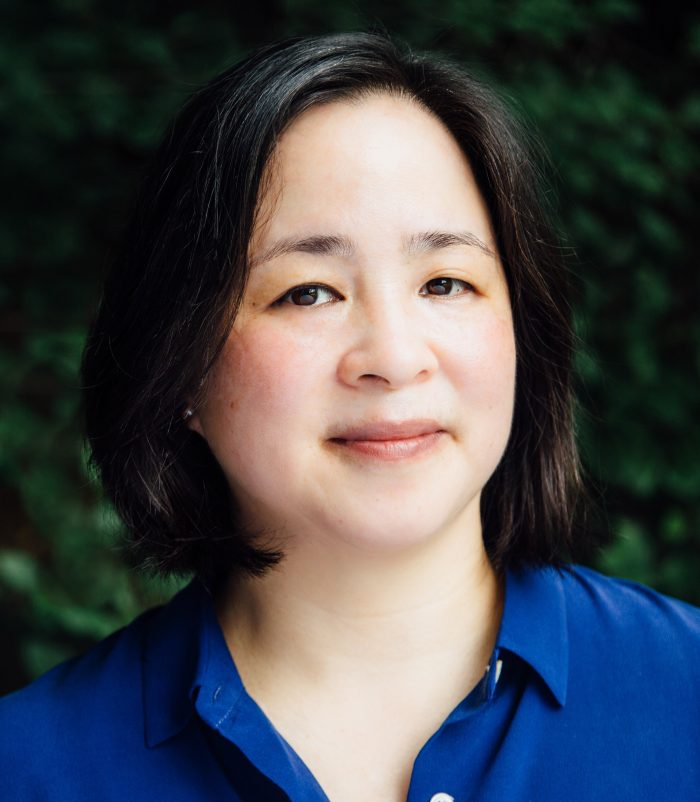
Alison Chang
At the start of each fellowship year, we hold a virtual kickoff meeting so that ACLS staff can put faces to names, learn more about the fellows’ projects and their plans for their year, and above all, connect fellows to each other across different institutions and fields. We met with the incoming cohort of fellows at the end of July, and despite the meeting’s virtual format, I could sense everyone brimming with excitement, nervousness, and anxiety. I asked each fellow to introduce themselves, provide a summary of their project, and what they envision as their greatest challenge in the year ahead. Although it was phrased differently by each fellow, they all worried that they would not be able to manifest what they had proposed in their application into practice. They had proposed ambitious and exciting research, but could they make it work?
After four years of completed Mellon/ACLS Dissertation Innovation Fellowships, I can confidently say that that they will successfully find their way through their research. Some of the most important lessons they learn don’t come from a straightforward and seamless fellowship year, but through the struggles and failures. Ultimately, at the end of their fellowship, many fellows report back that the fellowship facilitated research, scholarship, and progress towards their degree, but perhaps just as importantly, the work they undertook reinforced their commitment to innovative scholarship as they moved forward in their careers.
2024 Mellon/ACLS Dissertation Innovation Fellow Daniel Lobo, a Sociology PhD student at the University of California, Berkeley, examined the concept of “culture add” in elite hiring, trying to answer the question “who is hired for elite jobs and why?” At the end of the year, Lobo noted, “the fellowship provided the space for professional growth and scholarly community-building…I now feel I am entering a new phase of my academic career—one where I am finding my intellectual voice, my scholarly community, and a deeper sense of purpose.”

The fellowship provided the space for professional growth and scholarly community-building…I now feel I am entering a new phase of my academic career—one where I am finding my intellectual voice, my scholarly community, and a deeper sense of purpose.
Daniel Lobo
2024 Mellon/ACLS Dissertation Innovation Fellow
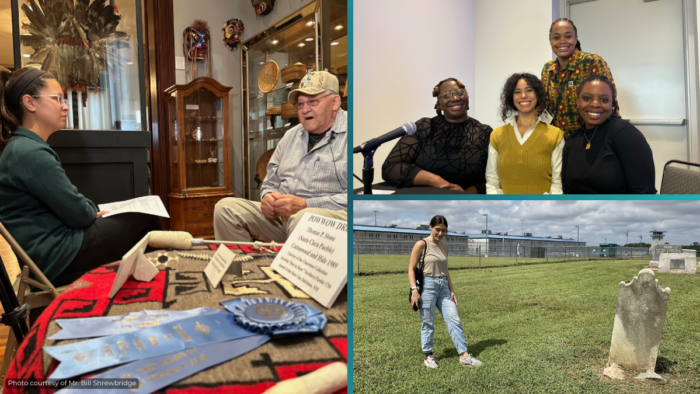
Darius Stewart, a 2024 fellow and English PhD student at the University of Iowa, is completing a project on the evolving public perception of the “down low.” The “DL” is a sexual metaphor for Black men who identify as heterosexual but conceal same-gender desires. Stewart’s scholarship incorporates speculative memoir, an innovative form of writing which blends fictional scenarios, magical realism, and personal narrative. In his final report, Stewart said, “the Mellon/ACLS Fellowship validated the intellectual and emotional stakes of this kind of experimental work. It enabled me to fully commit to a hybrid form that thoughtfully explores the connection between queer grief, desire, and critique. As I prepare for final revisions and my defense, I carry forward a method and voice shaped by this unique opportunity to write (and think) without apology.”
Kenya Loudd, a 2024 fellow studying African American Studies and History of Science and Medicine at Yale University, researched the history of racially-segregated American institutions for the disabled at the turn of the century. As Loudd reflected on her fellowship experience, she noted “I can honestly say that it was a time of tremendous growth for, not only my project, but for me as an individual. I felt supported in every stage of the process by ACLS staff and my mentor. I move into the future feeling empowered and prepared to impact future generations.”
The humanities and social sciences are enriched by scholars who push boundaries, imagine creative solutions, and have the potential to make change not only within the academy. During our virtual kickoff meeting, many 2026 fellows mentioned their priority for the year was to connect with the communities most impacted by their research, rather than reach benchmarks, publish articles, and deliver conference talks. I am sure that these fellows will achieve all of that—and more—but I was inspired to hear that for many of them, this research held importance beyond a doctoral degree.
Alison Chang
ACLS Senior Program Officer for US Programs
Mellon/ACLS Dissertation Innovation Fellowship News
-
ACLS offers programs that promote research across all fields of the humanities and social sciences.
News Article
July 13, 2026
-
Awards support 50 early-career graduate students transcending the boundaries of doctoral research
News Article
April 29, 2026
-
Hear from first-generation scholars at multiple career stages about how mentorship, community, and support through fellowships have shaped their research and paths in higher education.
News Article
November 12, 2025
-
Recent awardees reflect on their fellowship experiences, in which they conducted exciting new research on underrepresented communities and histories.
News Article
April 8, 2025
-
Four Mellon/ACLS Dissertation Innovation Fellows share their pathbreaking research methodologies, project formats, and areas of inquiry.
News Article
July 28, 2023
Learn About This Year’s Competition