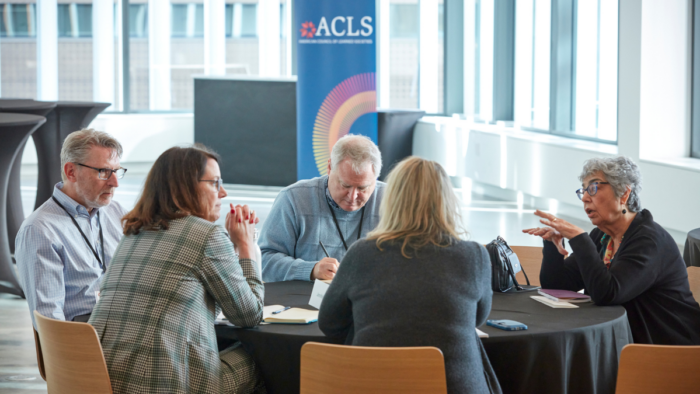
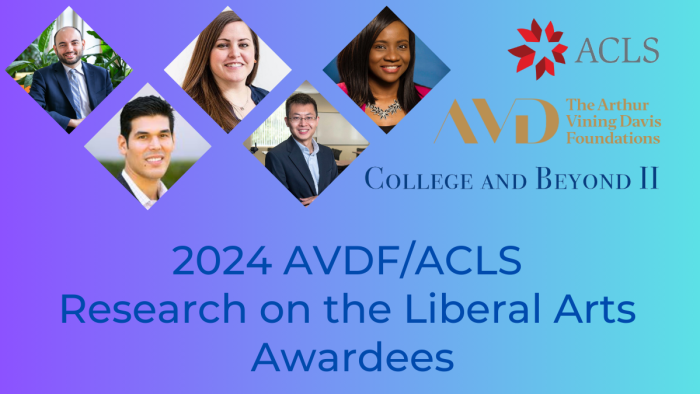
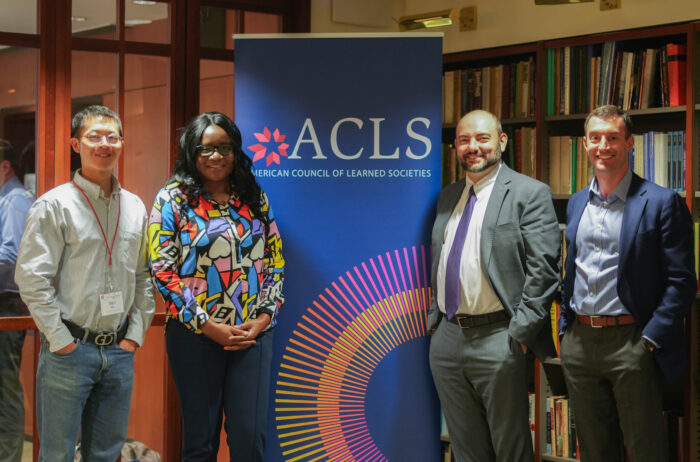
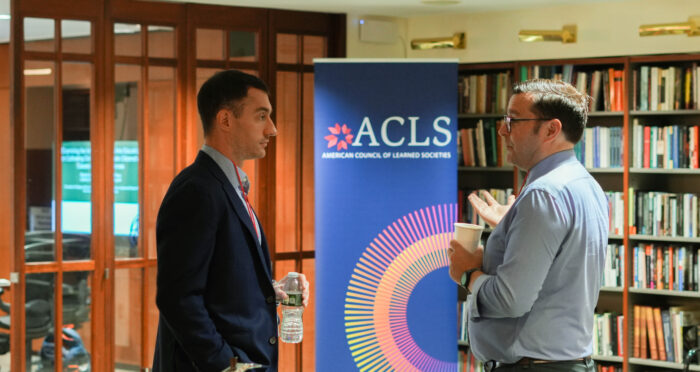
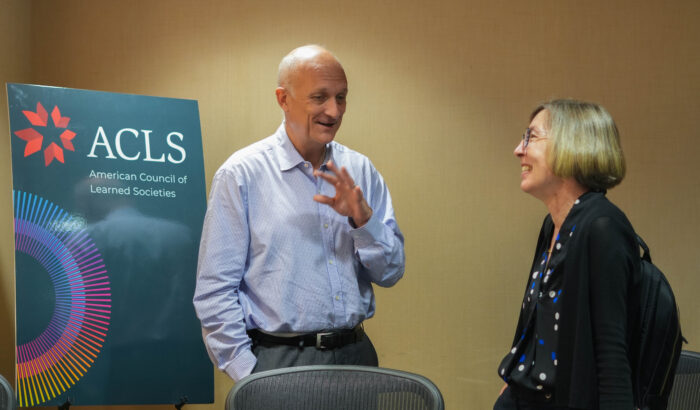
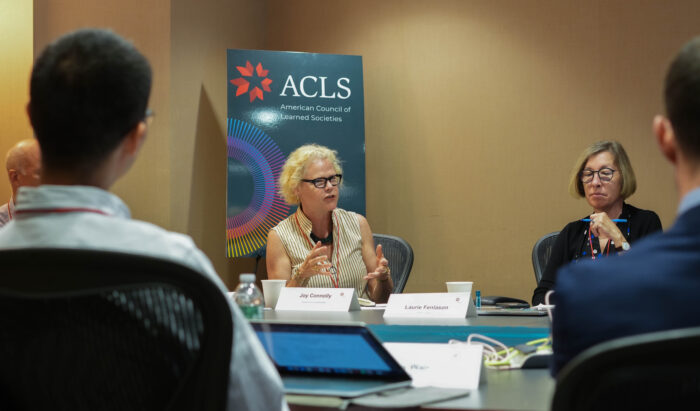
On Friday, July 18, 2025, ACLS convened a workshop for the AVDF/ACLS Fellows for Research on the Liberal Arts to present their work for feedback and discussion with a small group of higher education stakeholders at the ACLS offices in New York.
In 2024, these fellows utilized the College and Beyond II (CBII) database (housed at the Interinstitutional Consortium for Policy and Research Center at the University of Michigan), which includes more than one million student records, 50 million course enrollments, and alumni surveys for 2,800 respondents, for research projects investigating the longitudinal impact of liberal arts education.
“In supporting these research projects, we hope to present a fuller understanding of the liberal arts,” explained ACLS Vice President James Shulman about the program. “This research can be used to improve and, as needed, defend funding and support for departments and fields of study in a challenging higher education arena.”
Fellows presented on a wide range of research projects using a variety of approaches that examined how exposure to the liberal arts impacted wellbeing, economic outcomes, and civic engagement.
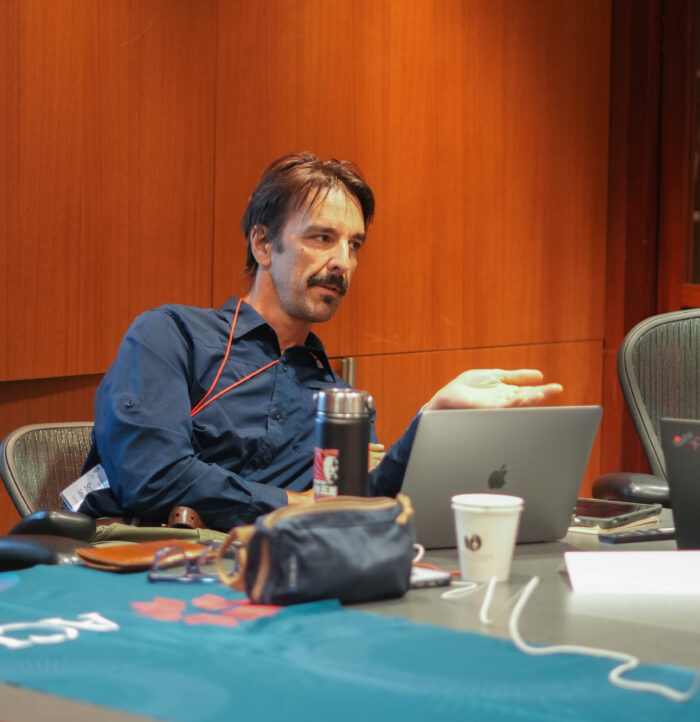
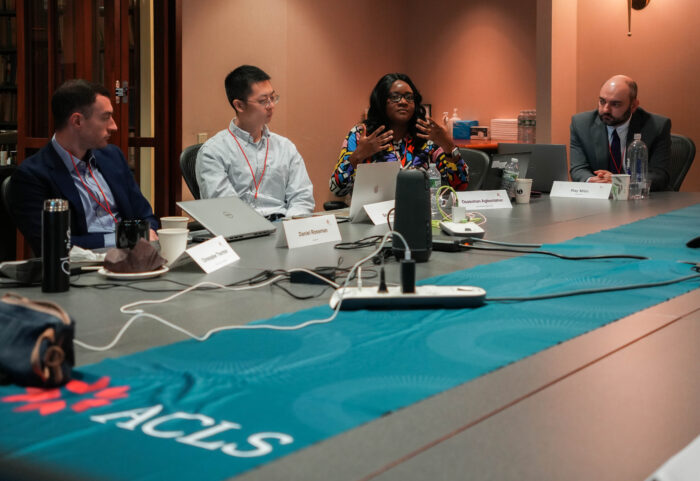
Daniel Rossman, principal on education info team at ITHIKA S+R, who partnered on the awarded project with Elizabeth Pisacreta, ITHIKA’s director, educational transformation, shared outcomes from their newly published research report “Measuring the Economic Value of a Liberal Education.” Key findings included:
Other program fellows presented promising research expected to be published in fall 2025 and spring 2026.
Osasohan Agbonlahor, assistant professor of leadership studies at North Carolina A&T State University, presented findings that propose that (on average) moderate levels of student debt are associated with higher levels of an individual’s level of civic involvement and political activism. Notably, this finding is not associated with lower or higher levels of debt: there seems to be a “sweet spot” of debt levels where liberal arts study supports these positive outcomes.
In addition, student involvement in extra-curricular activities was found to be associated with higher levels of later life civic involvement. Radomir Ray Mitic, assistant professor of higher education at William & Mary, presented findings from his paper under review that specific components of liberal arts education—such as diversity-focused courses, participation in service-learning programs, and involvement in student organizations—play a significant role in fostering active and engaged citizenship. Mitic defines “generative behavior” as actions undertaken by adults to guide subsequent generations, including teaching someone a skill, serving as a role model, and influencing others. Using the CBII alumni survey data, Mitic studied liberal arts and non-liberal arts students with regard to whether they felt that they have something valuable to contribute to society, whether they try to pass on positive values to younger generations, and how often they reflect on the impact they want to make in the world. Political engagement outcome was measured through questions assessing engagement through discussing, reading about, and taking action in response to political and social issues.
Sirui Wan, a post-doctoral scholar in the department of psychology at the University of Wisconsin-Madison, also shared key findings from research focused on longitudinal economic outcomes and student debt levels of liberal arts students, engagement with civic and political activity, and understanding patterns of major switching and its relationship to short- and long-term outcomes of students.
“As the National Center for Education Statistics has been severely limited by recent actions by the federal government, access to CBII is highly valuable for researchers,” noted Matic. “In demonstrating the value of the liberal arts, we need to reframe this education as an investment in democracy. The CBII database is helping us do this.”
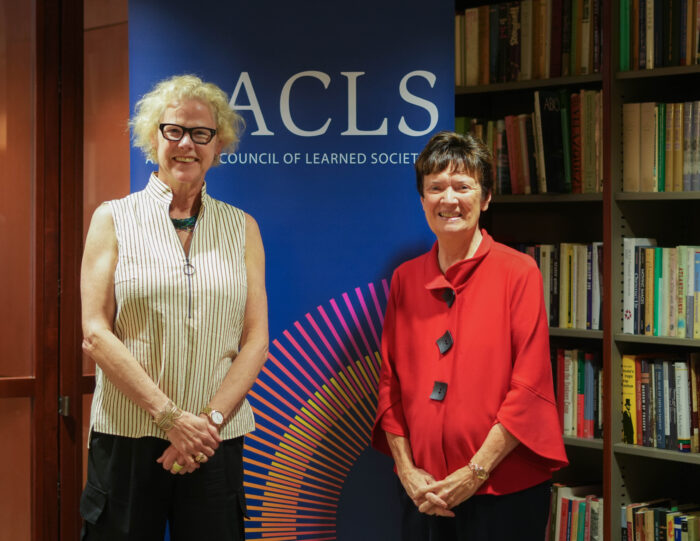
Presentations were followed by lively discussions with participating interlocutors Scott Carlson, senior writer for The Chronicle of Higher Education; Lynn Pasquarella, president of the American Association of Colleges and Universities (AAC&U), and strategy and communication consultant Laurie Fenlason on the role of research in understanding and communicating about and improving higher education.
Funded research will be published over the next year, and ACLS plans to continue helping to disseminate this important work to institutions, legislators, and other key influencers shaping the future of higher education.